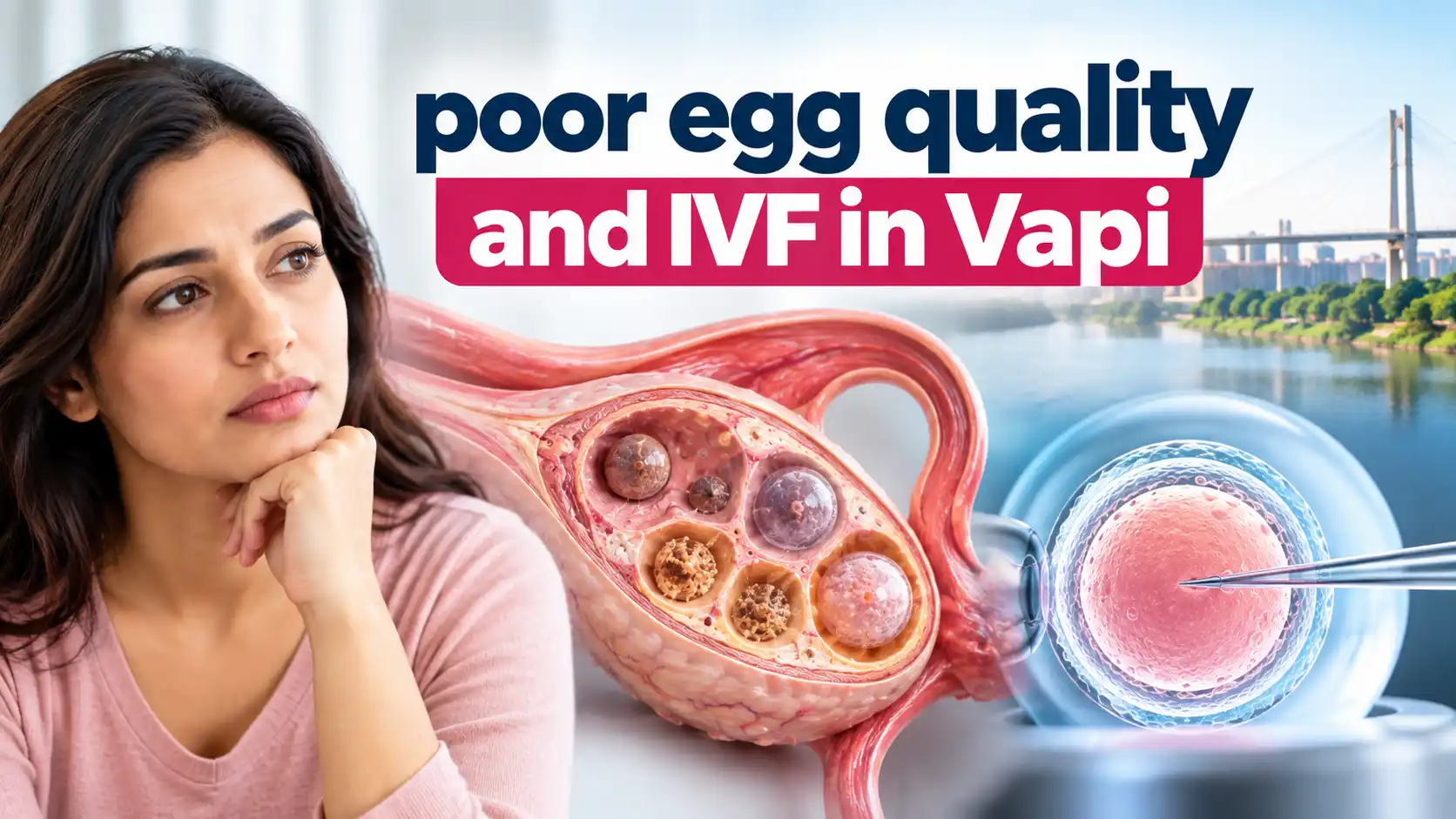

The words “poor egg quality” can stop a conversation cold. You walk in expecting a routine update, and you leave carrying a phrase that sounds like a verdict. If you are facing poor egg quality and IVF in Vapi, two things are worth knowing right away: this label is far more common than most couples realise, and it is much less final than it sounds.
Egg quality sits at the centre of every IVF cycle.
- It decides which eggs fertilise and which do not.
- It decides which embryos grow to the blastocyst stage.
- It shapes whether a transfer leads to a heartbeat.
Quality is not a mystery either. We can measure it, watch it in the lab, and improve the conditions around it. In the next few minutes, you will see what poor egg quality actually means, how it differs from a low egg count, what age really does, and which changes are worth your time and money.
Key Takeaways
- Egg quality and egg count are different things. Ovarian reserve (AMH, follicle count) measures how many eggs are left. Quality measures how well those eggs fertilise, grow, and lead to a healthy pregnancy.
- Chromosome errors inside eggs rise sharply with age. One published IVF study found aneuploidy in about 28% of embryos below age 30 and about 67% after 40.
- IVF success with your own eggs falls with age. CDC data shows live birth rates of roughly 40% per retrieval under 35, dropping to about 10% in the early 40s.
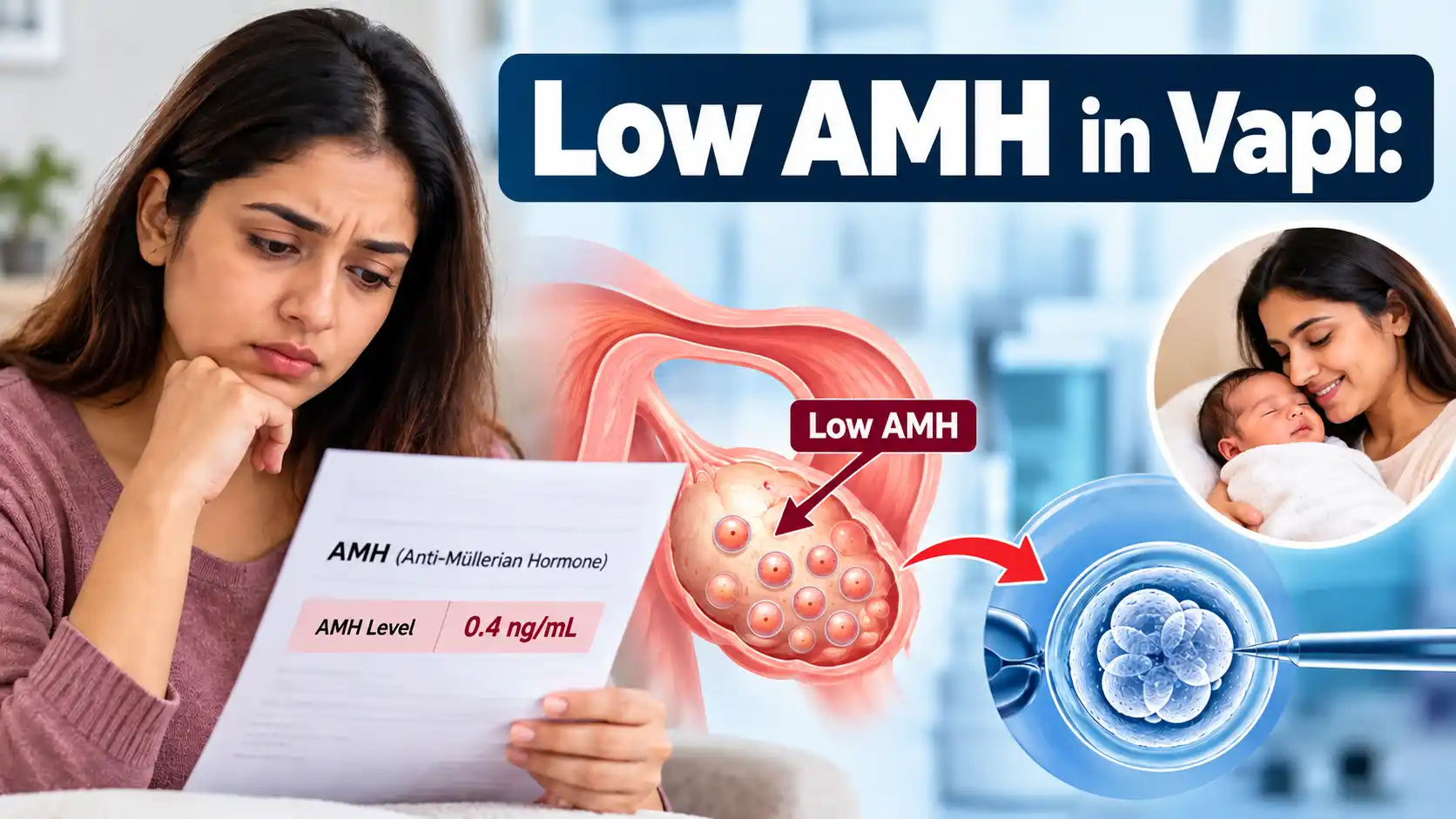
- Low AMH does not automatically mean poor quality. Many women with low counts still produce excellent embryos when the stimulation plan suits their ovaries.
- Smoking harms fertility for both partners, and quitting is the single most useful lifestyle step.
- Donor egg cycles keep comparatively stable success rates across recipient ages, because quality follows the donor’s age.
What Poor Egg Quality Actually Means
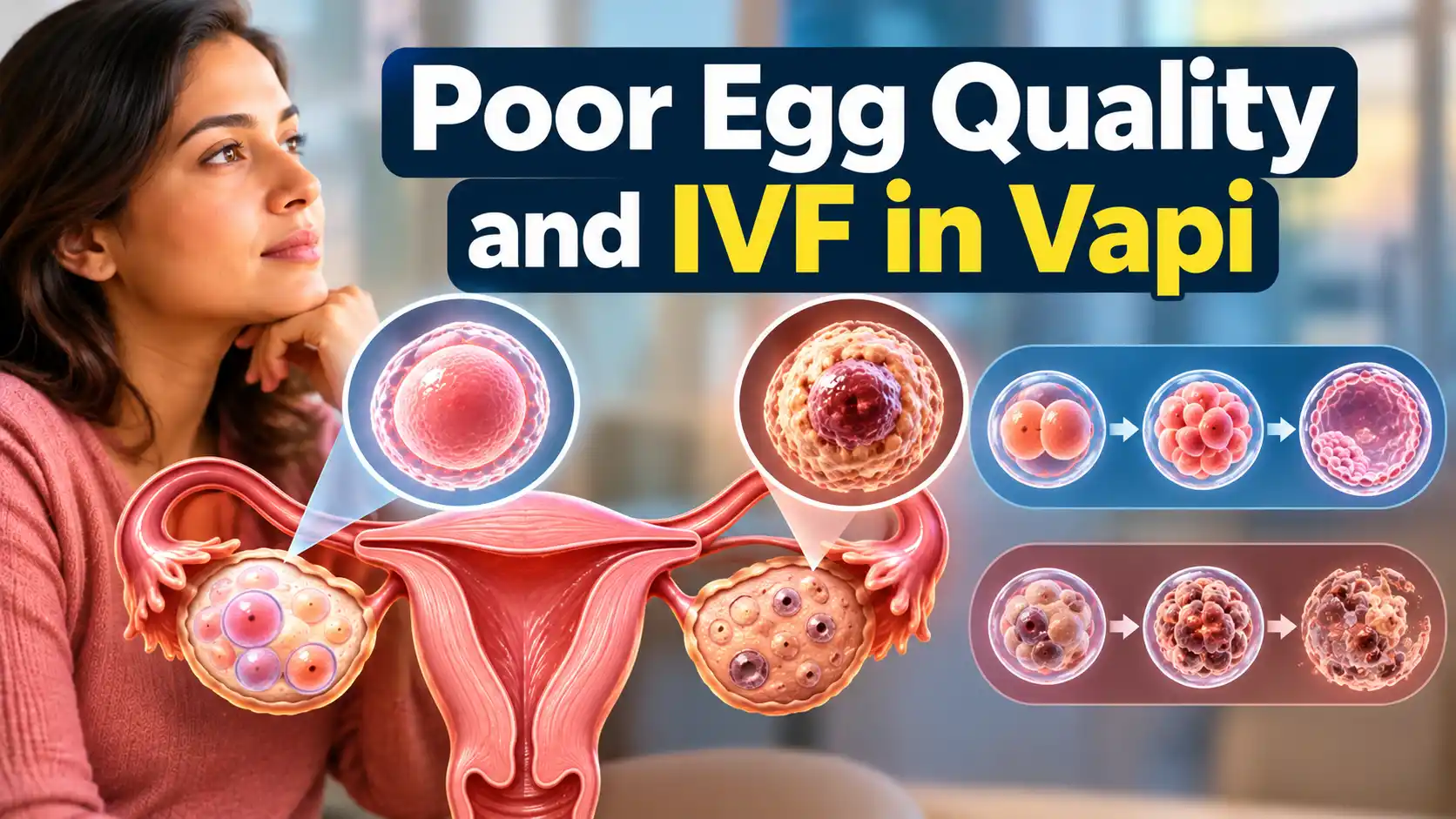
An egg is not just a container. It carries half of the baby’s genetic material, plus the energy supply that runs the first days of embryo life. Quality describes how well an egg handles three jobs: fertilising normally, growing into a blastocyst, and supporting a healthy pregnancy.
The biggest hidden factor is the chromosome package. Each mature egg should release exactly 23 chromosomes. When that split goes wrong, the embryo ends up with an extra or missing chromosome. Most such embryos stop growing within days, or the pregnancy test stays negative.
“When I explain quality to couples, I keep it simple. A good egg has the right chromosomes and enough fuel to run the early embryo. A poor-quality egg falters at one of those two jobs, and the lab report is usually the first place we see it.” Dr. Kaushal Patel
That is the honest meaning behind poor egg quality and IVF in Vapi: a label on one cycle’s report, not a comment on your worth or your future.
Ovarian Reserve and Egg Quality: Two Different Things
Reserve and quality get mixed up constantly, even on reputable websites. Reserve answers one question: how many eggs are left? Quality answers a different one: how well do those eggs work?
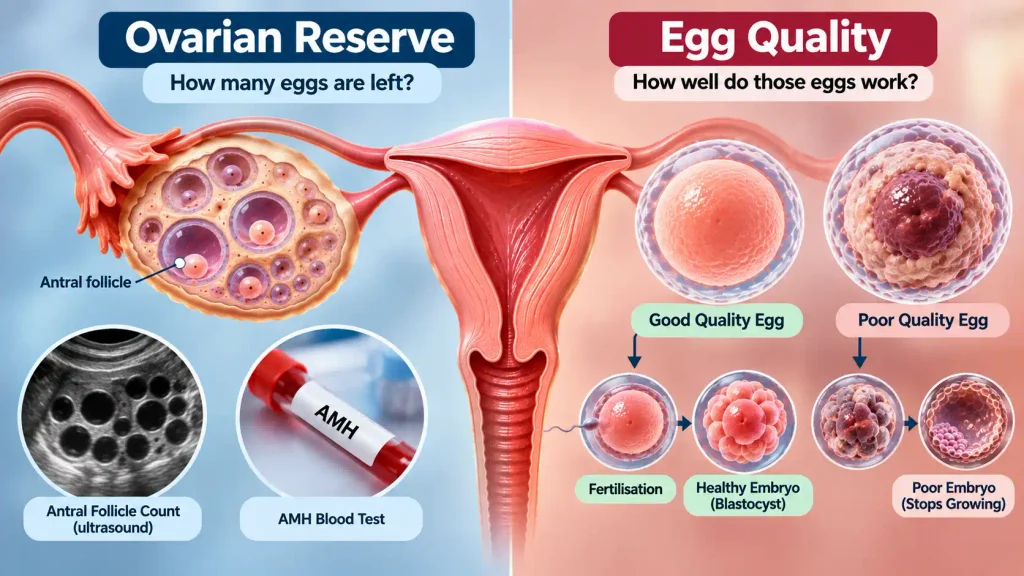
| Ovarian Reserve | Egg Quality | |
|---|---|---|
| What it measures | How many eggs remain | How well eggs fertilise and grow |
| Main tests | AMH blood test, antral follicle count, FSH | Fertilisation rate, embryo grades, blastocyst rate, genetic testing |
| What lowers it | Age, ovarian surgery, endometriosis | Mainly age, plus smoking |
| Can medicines raise it? | No. Stimulation changes the cycle, not the store | An egg cannot be repaired, but protocols can protect the best ones |
| A low result means | Fewer eggs per cycle, higher cancellation risk | Weaker embryos, lower chance per transfer |
Tests like AMH and the follicle count estimate quantity. They cannot tell us whether an individual egg is chromosomally healthy. Only the lab, or genetic testing of embryos, shows that.
Many women with low counts produce beautiful embryos, and some with generous counts face repeated poor results. If your AMH came back low, our study on low AMH and low egg count explains what those numbers can and cannot predict.
Age and Egg Quality: What the Numbers Show
Age is the strongest single influence on egg quality and fertility. Women are born with all the eggs they will ever have, and those eggs age with the body. Over time, the cell machinery that divides chromosomes evenly wears down.
Research puts numbers on it. In one large IVF cohort, about 28% of embryos from women under 30 were chromosomally abnormal, rising to about 67% after 40. The CDC’s IVF success rates show the same pattern from the other side.
- Before 35: most cycles still produce at least one chromosomally normal embryo.
- Fertility after 35: the decline is gentle at first, then steeper after about 38.
- Fertility after 40: outcomes depend heavily on how many good embryos each cycle yields.
We cover this biology in depth in our research to getting pregnant after 35. For couples weighing poor egg quality and IVF in Vapi, age usually explains more of the story than any single hormone value.
How Doctors Assess Egg Quality Before and During IVF
Before a cycle, we work with proxies. AMH, the antral follicle count on ultrasound, and day 2 or 3 FSH sketch the reserve. They hint at how a cycle might respond, but they never confirm quality.
What the lab report shows during the cycle
| Stage | Signal doctors watch |
|---|---|
| Egg retrieval | Number of eggs collected and how many are mature |
| Fertilisation check | How many eggs fertilised normally |
| Day 3 | Cell number and fragmentation |
| Day 5 | Blastocyst formation and grade |
| Genetic testing (PGT-A) | Whether embryos are chromosomally normal |
Embryo grades describe appearance, not genetics. A good-looking embryo can still carry a chromosome error, which is why some clinics add PGT-A testing in selected cases.
If a previous cycle left you confused, walking through our IVF process step by step usually makes every number on that report easier to read.
Why Some Eggs Fertilise but Embryos Stop Growing
Fertilisation proves the shell opened and the genetic material joined. It does not promise the embryo has fuel to keep dividing. Poor IVF egg quality often shows up exactly here: eggs fertilise on day 1, look acceptable on day 3, and stall before the blastocyst stage.
Three forces decide what happens next:
- Chromosome errors inside the egg, the leading cause by far.
- Mitochondria, the tiny power plants inside the egg, which supply energy for early division.
- Sperm health, because DNA damage in sperm can arrest embryo development in IVF even when the egg looked healthy.
Couples are often surprised how often the problem is shared between both partners. Where sperm numbers are very low or fertilisation is weak, ICSI treatment, which injects a single sperm into each egg, helps us separate egg problems from sperm problems. When embryos stall cycle after cycle, poor egg quality and IVF in Vapi conversations turn to this exact question: eggs, sperm, or lab conditions?
Improving Egg Quality: What Helps and What Does Not
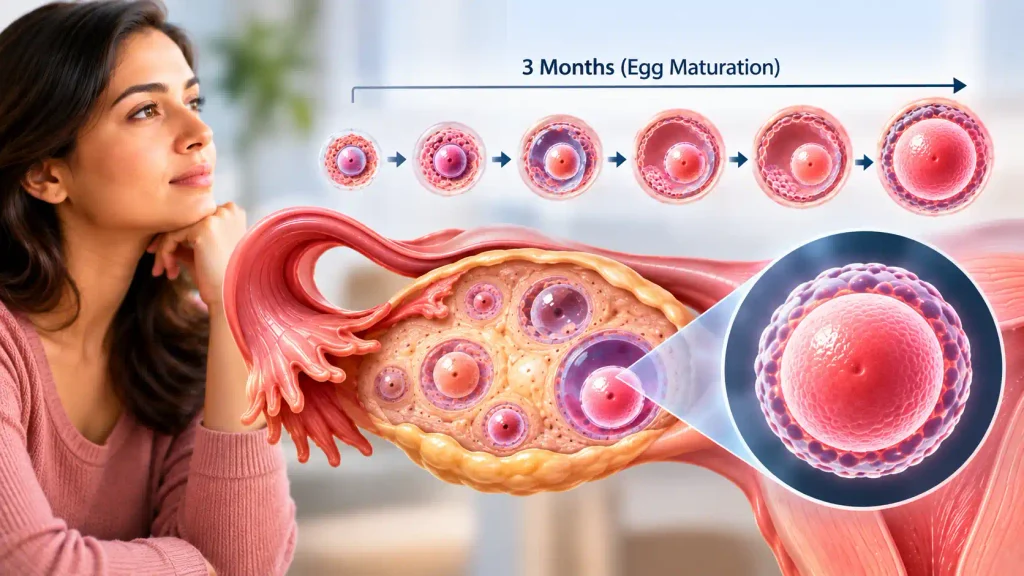
Eggs take roughly three months to mature before retrieval. The “90-day window” people talk about online is real, though its effect is modest, not magic. What you do in those months can nudge the next batch in the right direction.
Changes with real support behind them:
- Quit smoking. NHS guidance lists smoking among the clearest fertility harms for both partners, including passive smoking.
- Reach a healthy weight and protect your sleep.
- Treat underlying conditions like thyroid disorders and uncontrolled blood sugar.
- Review medicines and existing supplements with your doctor before the cycle.
Claims that do not hold up: no diet flushes out old eggs, no capsule repairs chromosomes, and expensive “ovarian rejuvenation” treatments lack solid evidence.
CoQ10 is the most studied add-on. In one randomised trial of young women with reduced reserve, women taking CoQ10 had far fewer transfers cancelled for poor embryo growth, 8% versus 23%. One trial is promising, not proof, and dosing should always be supervised.
Treatment Options for Poor Egg Quality and IVF in Vapi
Treatment starts with the previous cycle’s data. Stimulation doses, egg maturity, fertilisation method, and day 5 rates each point to a different fix. Changes we consider:
- Adjust the stimulation dose or protocol to improve egg maturity.
- Use ICSI when fertilisation rates run low.
- Grow embryos to the blastocyst stage to select the strongest.
- Consider PGT-A testing after repeated setbacks or at advanced age.
- Freeze and pool embryos across cycles when counts run thin.
“Patients bring me long supplement lists, sometimes five or six bottles. I never dismiss them, but I rank them honestly: quitting smoking beats any capsule on that list. Then we fix the protocol, because a well-designed cycle protects the few good eggs you have.” Dr. Kaushal Patel
Poor egg quality treatment is rarely about one hero drug. It is about removing small losses at every stage, because small gains stack. For most couples facing poor egg quality and IVF in Vapi, the plan that finally works is a corrected protocol plus patience across two or three cycles.
When Donor Eggs Become the Smarter Path
When several well-planned cycles keep producing the same poor embryos, the honest conversation turns to egg donation. It is not failure. It is choosing the route with the best odds.
Reasons families reach this point:
- Repeated cycles with no viable embryo despite protocol changes.
- Advanced age where chromosome errors affect most eggs.
- A wish to avoid the physical and financial toll of further low-yield cycles.
Because quality follows the donor’s age, donor egg success stays comparatively stable even for recipients in their 40s. Families exploring poor egg quality and IVF in Vapi usually meet this decision earlier than they expect, and clear numbers make it far easier to face.
About the Author
Dr. Kaushal Patel is an IVF specialist and gynaecologist practising in Vapi, serving couples across South Gujarat, Valsad, Daman, and Silvassa. He is a published author in a reputed international fertility journal and leads the fertility programme at Isha Women’s Hospital.
“Numbers calm people more than reassurance does. When a couple sees their own chances written clearly, fear turns into a plan. My job is to make sure that plan is honest.” Dr. Kaushal Patel
Final Thought
A label on a lab sheet is not a prophecy. Some cycles surprise us in both directions, and the couples who do best are the ones who keep measuring, adjusting, and deciding with clear numbers. If your last report said poor egg quality, treat it as information, not a verdict.
Bring your reports to a consultation, ask what each number meant, and build your next step on facts rather than fear. If you are in or around Vapi, our team at Isha Women’s Hospital reviews failed-cycle reports with couples every week.
Frequently Asked Questions
1. What does poor egg quality actually mean in IVF?
An egg is called poor quality when it struggles to fertilise normally, stops growing before the blastocyst stage, or carries a chromosome error. The label usually comes from the embryology report, not from symptoms. It describes that cycle’s eggs, not your value as a future parent.
2. Is poor egg quality the same as low AMH or low ovarian reserve?
No. AMH and follicle counts estimate how many eggs remain, while quality describes how well those eggs perform. The two decline together with age, but they are separate measurements. A low AMH with good embryos is common, and so is a normal AMH with weak embryo growth.
3. How are ovarian reserve and egg quality different in IVF?
Reserve predicts quantity, meaning how many eggs a stimulation cycle might collect. Quality shows up later, in fertilisation rates, blastocyst rates, and genetic results. Two women with identical AMH values can produce very different embryos, which is why lab performance matters more than one blood value.
4. Can you have low AMH but still have good-quality eggs?
Yes, and it happens often. Fewer eggs means a thinner cushion and a higher chance of a cancelled cycle or no embryo to transfer. But eggs from women with low AMH fertilise and grow well in many cycles, especially when the stimulation plan fits their ovaries.
5. How does age affect egg quality and IVF success?
Age raises chromosome errors inside eggs, which lowers the chance that any embryo leads to a live birth. Success rates with your own eggs fall from around 40% per retrieval under 35 to about 10% in the early 40s. The trend is steady, though individual cycles vary widely.
6. Does egg quality decline significantly after 35?
The decline is gradual through the mid-30s and steeper after about 38. Studies show chromosomal abnormality in embryos climbing sharply across the late 30s and 40s. Many women in their late 30s still have good cycles, which is why we measure rather than assume.
7. What does poor egg quality mean for fertility after 40?
After 40, most eggs carry chromosome errors, so each cycle usually yields fewer normal embryos. IVF can still work, but expectations should be set around the odds of finding a healthy embryo per cycle. This is also where donor eggs often offer better numbers.
8. How can doctors assess egg quality before or during an IVF cycle?
Before a cycle, AMH, follicle counts, and FSH estimate reserve, not quality. Real answers come during the cycle: egg maturity at retrieval, fertilisation rate, day 5 blastocyst formation, and embryo grades. Genetic testing of embryos adds chromosome information when it is clinically useful.
9. Can poor egg quality affect fertilisation and embryo development?
Yes. Immature or chromosomally unbalanced eggs often fertilise poorly or arrest within days. When fertilisation looks normal but embryos stall by day 3 or 4, egg quality is a frequent contributor, though sperm DNA damage and lab conditions share the blame more often than couples expect.
10. Why do some eggs fertilise but fail to develop into good-quality embryos?
Fertilisation only confirms the genetic handshake. Growth needs energy from the egg’s mitochondria, an even chromosome split, and a stable lab environment. A failure at any of these steps stops development, which is why embryologists watch day 3 and day 5 patterns so closely.
11. Can poor egg quality be improved before starting another IVF cycle?
You cannot change the chromosomes an egg was born with, but you can improve conditions for the next batch. Three months of no smoking, a healthy weight, better sleep, and controlled thyroid or sugar levels all help. Protocol changes often matter just as much.
12. Do supplements, diet, or lifestyle changes improve egg quality for IVF?
Lifestyle changes have the clearest support, especially quitting smoking and reaching a healthy weight. CoQ10 showed benefit in one well-known trial, and some clinics use it, but no supplement repairs chromosomes. Always review supplements with your fertility doctor, because some interfere with treatment.
13. Can IVF work if most of the retrieved eggs have poor quality?
Yes, because IVF needs one good embryo, not a full basket. Even a cycle with a handful of fair eggs can end in a healthy baby if one embryo implants. When repeat cycles produce no good embryo, that pattern guides the next decision, not the disappointment.
14. What happens if poor egg quality leads to repeated poor-quality embryos?
Repeated poor embryos trigger a full review of stimulation doses, fertilisation method, sperm DNA testing, and lab handling. Sometimes a protocol change shifts the outcome. When two or three well-run cycles produce the same result, we discuss options like donor eggs with real numbers, not pressure.
15. When should donor eggs be considered for poor egg quality in IVF?
Donor eggs deserve a conversation when multiple good-quality cycles keep producing no viable embryo, or when age makes the odds with your own eggs very low. Success rates with donor eggs stay comparatively high because quality follows the donor’s age. The decision is deeply personal, and good counselling takes time.