
Your periods were regular for years. Then, without warning, they stopped. No period for three months, four months, sometimes longer. You have taken pregnancy tests, all negative. You have waited, hoping things will settle on their own. But they have not. If this sounds familiar, what you may be experiencing is secondary amenorrhea, and your body is asking for attention.
Secondary amenorrhea is not a disease on its own. It is a sign that something in your hormonal system needs to be evaluated. The good news is that most causes are diagnosable with straightforward tests and, in the majority of cases, treatable. At iSHA Hospital and IVF Centre, Vapi, Dr. Kaushal Patel and her team work with women across South Gujarat who are navigating exactly this situation every day.
What Is Secondary Amenorrhea?
Secondary amenorrhea is defined as the absence of menstrual periods for three or more consecutive months in a woman who previously had regular cycles, or for six or more months in a woman whose cycles were already irregular. The key word here is “previously.” Unlike primary amenorrhea, where periods never began, secondary amenorrhea means your cycle was working and then stopped.
According to NCBI StatPearls, secondary amenorrhea occurs due to disruptions at various points along the hormonal pathway connecting the hypothalamus, pituitary gland, ovaries, and uterus. Any interruption in this chain can halt menstruation. The most important first step is always ruling out pregnancy, which remains the single most common cause.
Secondary Amenorrhea vs Primary Amenorrhea: What Is the Difference?
| Feature | Primary Amenorrhea | Secondary Amenorrhea |
|---|---|---|
| Definition | Periods never started by age 15 | Periods stopped after being regular |
| Previous cycle history | No prior periods | Had regular or irregular periods before |
| Common causes | Structural abnormalities, chromosomal issues | PCOS, thyroid, stress, Prolactin, POI |
| Who it affects | Adolescents | Women of reproductive age (15 to 45) |
| First investigation | Chromosomal and structural evaluation | Pregnancy test, then hormonal blood tests |
| Fertility impact | Often more complex | Often reversible with correct treatment |
What Causes Secondary Amenorrhea?
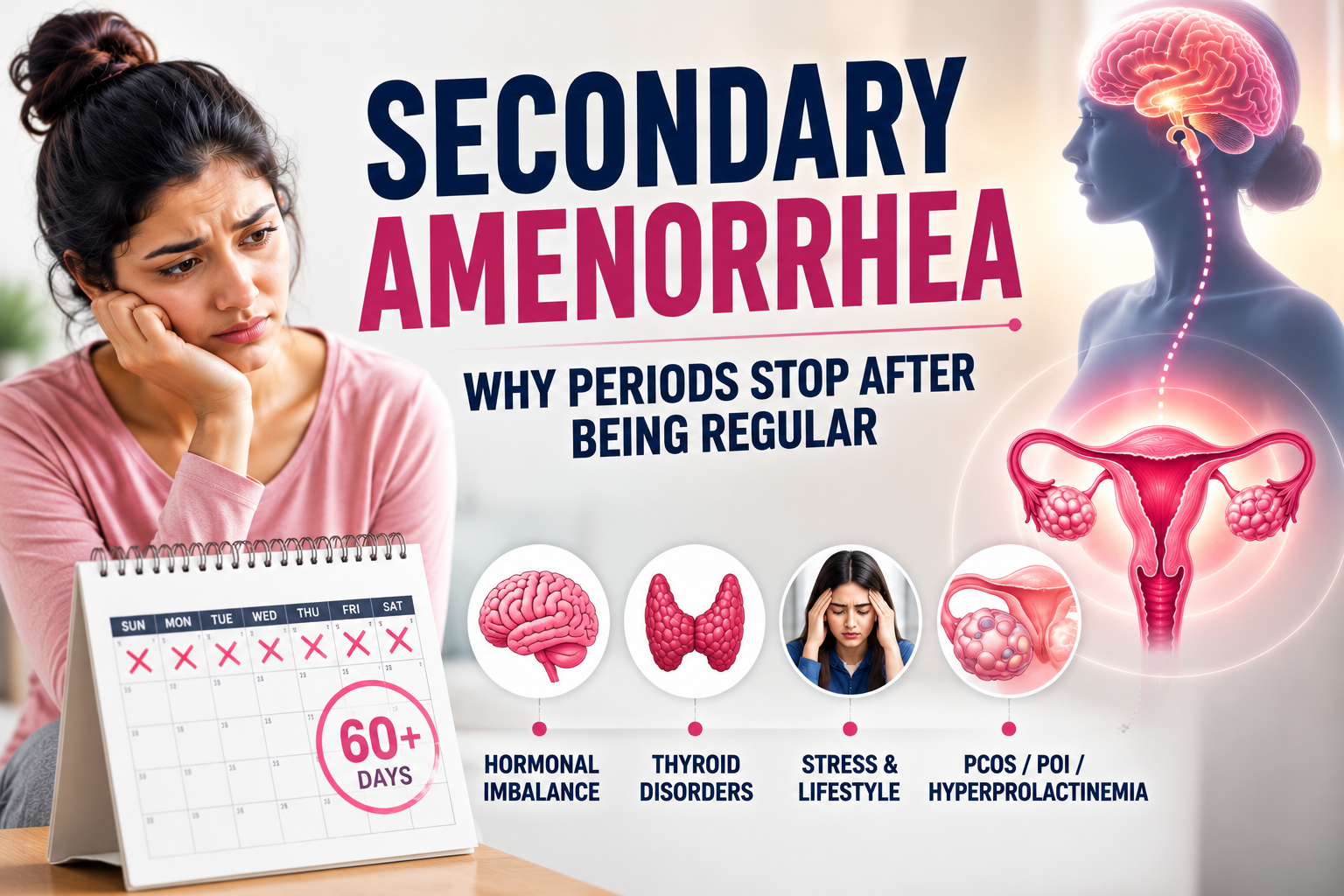
Secondary amenorrhea has a broad differential diagnosis. The five most common non-pregnancy causes, according to Cleveland Clinic, are functional hypothalamic amenorrhea, PCOS, hyperprolactinemia, primary ovarian insufficiency, and thyroid dysfunction. Here is how each one works:
1. Polycystic Ovary Syndrome (PCOS)
PCOS is the most common hormonal disorder in reproductive-age women and a leading cause of secondary amenorrhea. Elevated androgens and insulin resistance disrupt the normal pattern of ovulation. Without ovulation, there is no progesterone surge, no uterine lining shed, and no period.
- Irregular or absent cycles, often 35 days or longer
- Excess facial or body hair (hirsutism)
- Persistent acne, particularly along the jawline
- Weight gain concentrated around the abdomen
- Thinning scalp hair
- Polycystic-appearing ovaries on ultrasound
2. Functional Hypothalamic Amenorrhea (FHA)
This is the brain’s protective response to perceived stress. When the hypothalamus detects significant physical or psychological strain, it reduces GnRH (gonadotropin-releasing hormone) secretion, which suppresses the entire hormonal chain. Ovulation stops. Periods stop. The three main triggers are:
- Severe or chronic psychological stress — elevated cortisol directly suppresses the hypothalamic-pituitary axis
- Significant weight loss or very low body fat — crash dieting, eating disorders, or excessive caloric restriction deplete estrogen production
- Excessive exercise — particularly seen in athletes and women with very intense training regimens where energy expenditure exceeds intake
3. Hyperprolactinemia
Prolactin is the hormone responsible for milk production. When prolactin levels are elevated outside of pregnancy or breastfeeding, it suppresses GnRH and prevents ovulation. A benign pituitary tumour called a prolactinoma is the most common structural cause. Certain medications, particularly antipsychotics and some antidepressants, can also raise prolactin significantly.
- Milky nipple discharge without breastfeeding (galactorrhea)
- Frequent headaches
- Visual disturbances or blurring at the edges
- Reduced libido
4. Thyroid Dysfunction
Both hypothyroidism and hyperthyroidism interfere with menstrual regularity. The thyroid gland influences sex hormone metabolism, ovarian function, and the feedback loop between the brain and ovaries. Even mild thyroid imbalance can be enough to halt periods in susceptible women.
- Hypothyroidism signs: persistent fatigue, unexplained weight gain, cold sensitivity, hair loss, dry skin
- Hyperthyroidism signs: unexplained weight loss, heat intolerance, palpitations, anxiety, fine tremor
5. Primary Ovarian Insufficiency (POI)
POI occurs when the ovaries stop functioning normally before age 40. Estrogen levels drop, FSH rises dramatically, and periods become infrequent or stop. This is distinct from natural menopause, which occurs after age 45 to 50. Women with POI often experience menopausal symptoms at a much younger age and face unique fertility considerations.
- Hot flushes and night sweats before age 40
- Vaginal dryness and discomfort
- Difficulty sleeping
- Mood changes and low energy
- Difficulty conceiving
6. Asherman’s Syndrome
Intrauterine adhesions, or scar tissue inside the uterus, can develop after procedures such as D&C, myomectomy, or caesarean section. This scar tissue prevents the uterine lining from building and shedding normally. Secondary amenorrhea following a uterine procedure should always raise suspicion for Asherman’s syndrome. Hysteroscopy is required for both diagnosis and treatment.
7. Medications and Contraceptives
Several commonly used medications can cause secondary amenorrhea by raising prolactin or suppressing ovulation:
- Antipsychotics (risperidone, haloperidol)
- Some antidepressants and mood stabilisers
- Depo-Provera (injectable contraceptive), which can suppress periods for months after stopping
- Chemotherapy drugs
- Long-term corticosteroid use
How Is Secondary Amenorrhea Diagnosed?
Diagnosis of secondary amenorrhea follows a structured, step-by-step approach. At iSHA Hospital, Dr. Kaushal Patel begins with a thorough clinical history covering menstrual pattern, recent lifestyle changes, medications, weight fluctuations, stress levels, and any prior gynaecological procedures. This conversation alone often narrows the cause significantly before any test is ordered.
Step 1: Rule Out Pregnancy
A serum beta-hCG blood test is always the first investigation, regardless of contraceptive use or reported sexual history. It is the most accurate and eliminates the most common cause immediately.
Step 2: Hormonal Blood Panel
| Test | What It Measures | What Abnormal Values Suggest |
|---|---|---|
| TSH, T3, T4 | Thyroid function | Hypo or hyperthyroidism |
| Prolactin | Pituitary hormone | Prolactinoma or medication effect |
| FSH and LH | Ovarian stimulation hormones | High FSH may suggest POI; low may suggest FHA |
| Estradiol (E2) | Estrogen level | Low estrogen indicates ovarian suppression |
| Testosterone and DHEA-S | Androgen levels | Elevated in PCOS or adrenal disorders |
| AMH | Ovarian reserve | Low suggests diminished ovarian reserve or POI |
| Fasting insulin and glucose | Insulin resistance | Elevated in PCOS |
Step 3: Pelvic Ultrasound
A transvaginal or pelvic ultrasound evaluates the ovaries for polycystic morphology, checks endometrial thickness, identifies ovarian cysts or fibroids, and assesses overall uterine anatomy. This is a painless, non-invasive scan done in the clinic.
Step 4: Additional Investigations If Needed
- MRI of the pituitary gland: ordered when prolactin is significantly elevated, to identify or size a prolactinoma
- Hysteroscopy: indicated when Asherman’s syndrome is suspected, particularly after a uterine procedure
- Progestogen challenge test: helps differentiate between an outflow tract problem and a hormonal cause
- Karyotype: considered when POI is confirmed at a young age to check for chromosomal causes
Treatment Options for Secondary Amenorrhea
Treatment of secondary amenorrhea is always cause-specific. There is no single medication that works for all cases. At iSHA Hospital, the treatment plan is built around what the investigation findings show, not on assumptions.
| Cause | Treatment Approach | Expected Outcome |
|---|---|---|
| PCOS | Lifestyle modification, hormonal regulation, Metformin for insulin resistance, ovulation induction if fertility is desired | Cycle regularity restored in most cases; fertility achievable |
| Functional Hypothalamic Amenorrhea | Address root cause: weight restoration, stress management, exercise reduction, nutritional counselling | Spontaneous return of periods once energy balance is restored |
| Hyperprolactinemia | Dopamine agonists (cabergoline or bromocriptine) to reduce prolactin; surgery for large prolactinomas | Prolactin normalises, ovulation and periods resume |
| Thyroid Dysfunction | Thyroid hormone replacement (hypothyroidism) or antithyroid medication (hyperthyroidism) | Rapid return of menstruation once thyroid is controlled |
| Primary Ovarian Insufficiency | Hormone replacement therapy (HRT); fertility options include donor egg IVF | Symptom relief; natural conception unlikely but assisted reproduction possible |
| Asherman’s Syndrome | Hysteroscopic adhesiolysis (surgical removal of scar tissue) | Restoration of uterine cavity; return of periods in most patients |
Secondary Amenorrhea and Fertility: What You Need to Know
Secondary amenorrhea itself does not mean infertility. However, most of its causes directly affect ovulation, and without ovulation, natural conception cannot occur. The relationship between secondary amenorrhea and fertility depends entirely on the underlying cause and how promptly it is addressed.
- PCOS: Ovulation induction with medications such as letrozole or clomiphene is effective. IVF is available when simpler methods do not work. With proper management, the majority of women with PCOS can conceive.
- FHA: Once the underlying cause (weight, stress, or exercise) is addressed and periods resume naturally, fertility usually returns. No assisted reproduction is typically needed.
- Hyperprolactinemia: Dopamine agonists restore ovulation in most patients. Fertility returns once prolactin normalises.
- Thyroid disorders: Treating the thyroid condition restores normal ovulation and fertility in most women.
- POI: Natural conception is difficult but not impossible in early stages. Donor egg IVF offers the most reliable path to pregnancy. At iSHA’s IVF centre, this option is available with full counselling and support.
- Asherman’s Syndrome: Surgical correction followed by hormonal preparation of the uterine lining can restore the ability to carry a pregnancy.
The longer secondary amenorrhea goes unaddressed, the greater the risk of prolonged estrogen deficiency, which has consequences beyond fertility, including bone mineral density loss and cardiovascular effects. Early evaluation matters.
When Should You See a Doctor for Secondary Amenorrhea?
Do not wait. If any of the following apply to you, a consultation is overdue:
- You have missed periods for three months or more and pregnancy has been ruled out
- Your cycles were regular and then suddenly stopped
- You are experiencing hot flushes, night sweats, or vaginal dryness before age 40
- You have milky nipple discharge without breastfeeding
- You are trying to conceive and periods are absent
- You have a history of a uterine procedure and periods have not returned
- You are losing hair, gaining weight rapidly, or noticing significant changes in energy without explanation
“Secondary amenorrhea is one of those conditions where women often tell me they waited six months, a year, sometimes longer, thinking it would resolve on its own. In most cases, a single blood test panel and an ultrasound give us the answer within days. Waiting only delays treatment and, in women who want to conceive, that delay has real consequences. My advice is always the same: three months without a period and a negative pregnancy test means it is time to come in.”
Dr. Kaushal Patel, Gynaecologist and IVF Specialist, iSHA Hospital and IVF Centre, Vapi
Why Choose iSHA Hospital for Secondary Amenorrhea Treatment in Vapi?
At iSHA Hospital and IVF Centre, women from Vapi, Daman, Silvassa, Bhilad, and across South Gujarat come for gynaecological and fertility care under one roof. Here is what that means for someone with secondary amenorrhea:
- Same-facility diagnostics: Blood tests, pelvic ultrasound, and hysteroscopy are all available at iSHA, so you do not need to travel between multiple centres
- Integrated fertility care: If secondary amenorrhea has affected your fertility, the same team that diagnoses you can also manage IVF, IUI, and ovulation induction without referral delays
- PCOS expertise: Dr. Kaushal Patel has extensive experience managing PCOS, the most common cause of secondary amenorrhea in the region
- Laparoscopy and hysteroscopy: For cases involving Asherman’s syndrome or structural causes, minimally invasive surgical options are available in-house
- Continuity of care: From first consultation through diagnosis, treatment, and fertility follow-up, you see the same specialist throughout
Frequently Asked Questions About Secondary Amenorrhea
How long can secondary amenorrhea last?
It depends entirely on the cause. FHA caused by stress or low weight can resolve within weeks of addressing the trigger. PCOS-related secondary amenorrhea requires medical management but is very treatable. POI may be long-term and require ongoing hormone support. Without treatment, secondary amenorrhea caused by hormonal imbalances will not resolve on its own.
Can secondary amenorrhea go away on its own?
In a small number of cases, yes. If the cause was temporary, such as a short period of extreme stress or rapid weight loss that has since corrected, periods may return naturally. However, causes like PCOS, thyroid disorders, hyperprolactinemia, and POI require specific medical treatment to resolve.
Is secondary amenorrhea dangerous?
Prolonged secondary amenorrhea can have significant health consequences beyond missed periods. Chronic estrogen deficiency weakens bones (increasing osteoporosis risk), affects cardiovascular health, and impacts mood and cognitive function. Early diagnosis and treatment protect against these long-term effects.
Can I get pregnant if I have secondary amenorrhea?
Pregnancy is possible in most cases once the underlying cause is treated. PCOS, thyroid disorders, and hyperprolactinemia all respond well to treatment, after which ovulation and natural or assisted conception become achievable. POI is more complex, but donor egg IVF offers a reliable path to pregnancy.
What is the first test done for secondary amenorrhea?
Always a pregnancy test, specifically a serum beta-hCG blood test for maximum accuracy. Once pregnancy is excluded, a hormonal blood panel covering TSH, prolactin, FSH, LH, estradiol, and androgens is the next step, usually alongside a pelvic ultrasound.
Does secondary amenorrhea mean I have entered menopause?
Not necessarily. Menopause is just one of many possible causes of stopped periods. If you are under 45 and your periods have stopped, menopause is unlikely but POI (premature ovarian insufficiency) should be ruled out. A simple FSH blood test distinguishes between the two.
Medical Disclaimer: This page is intended for general informational purposes only. It does not constitute medical advice, diagnosis, or treatment. If you have missed periods for three or more months and pregnancy has been ruled out, please consult a qualified gynaecologist. For appointments at iSHA Hospital and IVF Centre, Vapi, book here.