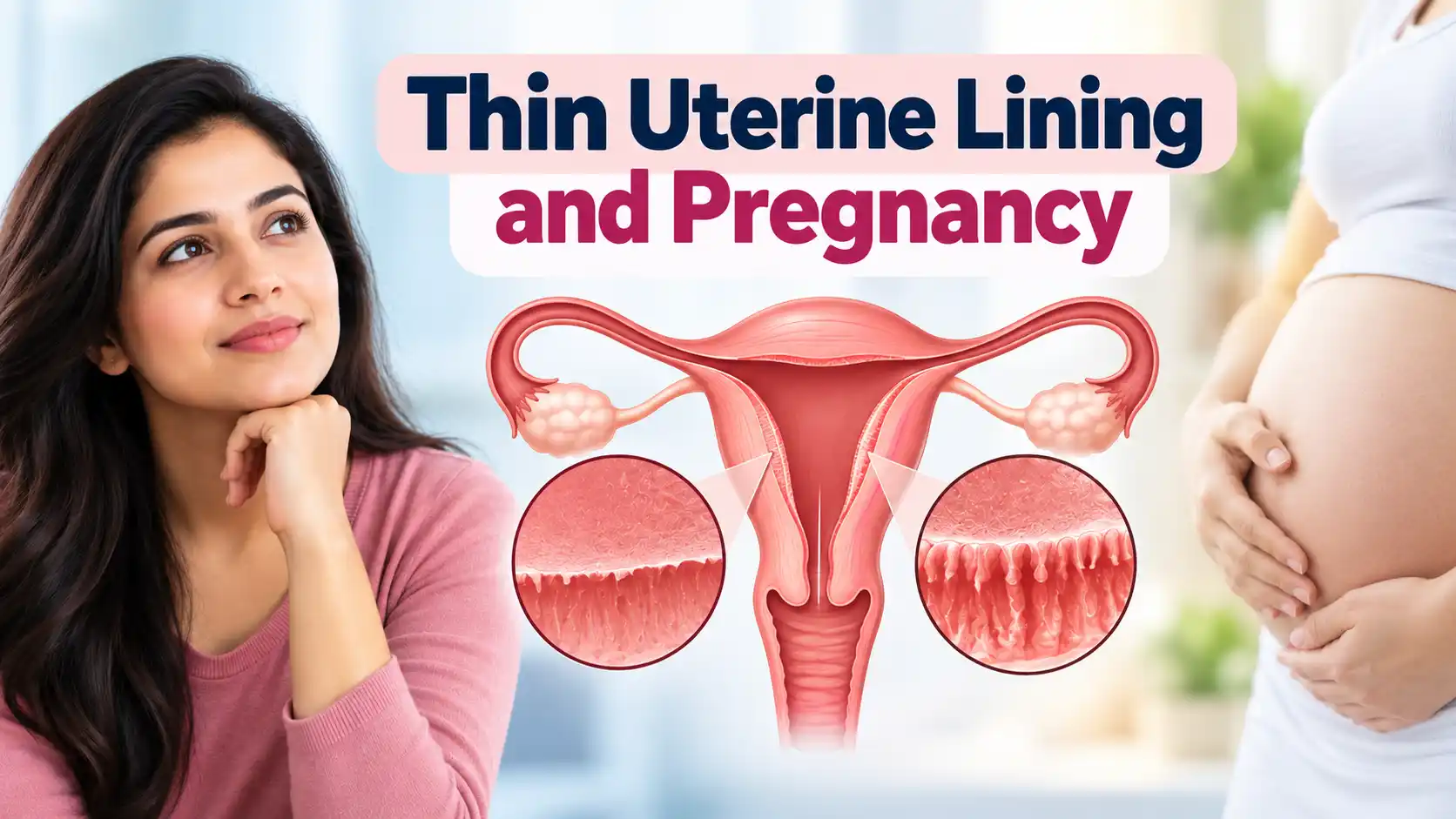


If you have lost a pregnancy more than once, you already know how heavy the silence feels afterward. The scans, the waiting rooms, the relatives who ask when you are “planning again.” Many women sit across from me in my Vapi clinic asking the same aching question: recurrent miscarriage, why does it keep happening to me?
You are not imagining a pattern, and you are not to blame for it. Grief after a loss like this deserves the same medical seriousness as any physical symptom, and what follows walks through the biology, the tests, and the treatment path.
Key Takeaways
- Recurrent miscarriage means three or more losses; specialists often start testing after two, especially past age 35.
- Chromosomal problems in the embryo cause roughly half of all early miscarriages, more so with age.
- No clear cause is found in about half of cases and most such couples still conceive successfully.
- Recurrent pregnancy loss affects roughly 1 to 5 percent of couples trying to conceive.
- Seven causes explain most identifiable cases: chromosomal, uterine, thyroid, clotting, PCOS-related, age-related, and lifestyle or unexplained factors.
- Treatment follows the cause; in genetic cases, IVF with PGT-A embryo testing is often the most reliable path forward.
- Women across Vapi, Daman, Silvassa, Valsad, Umargam and Navsari can get full evaluation and treatment at iSHA, without travelling to Mumbai or Ahmedabad.
What Counts as Recurrent Miscarriage?
Doctors define recurrent miscarriage as three or more pregnancy losses before 20 weeks, not necessarily back-to-back or with the same partner. Many clinics, including ours, do not wait for a third loss: if you are over 35, or your second miscarriage happened after 10 weeks, we start testing sooner.
Repeated Pregnancy Loss Causes: The Seven We Look For
Every couple wants one clean answer. Repeated pregnancy loss causes fall into a handful of categories, and finding yours usually takes a structured workup, not a single test.
1. Chromosomal Abnormalities
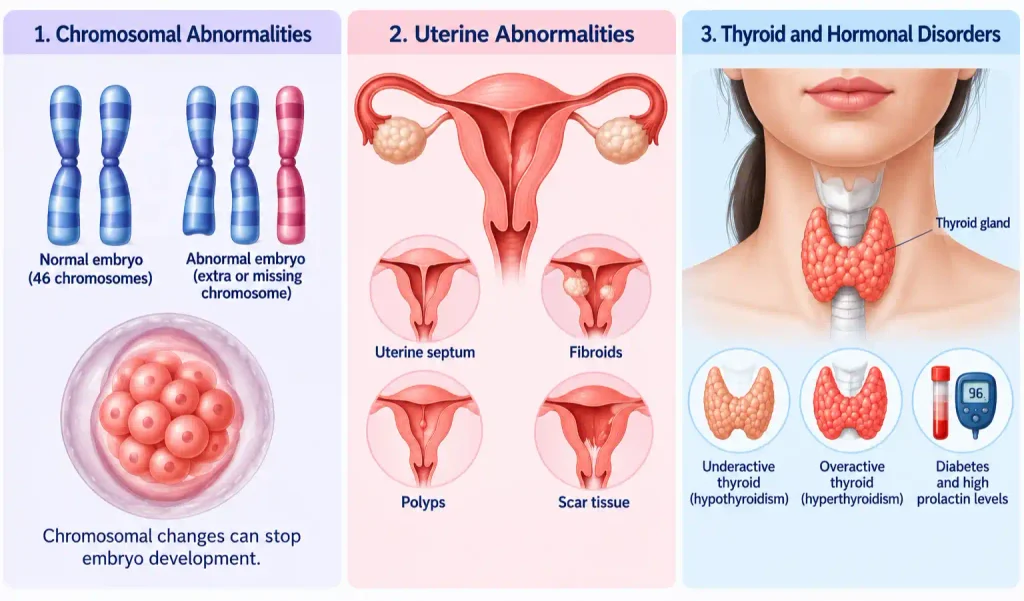
This is the single biggest reason a pregnancy stops developing. A chromosome is a bundle of DNA carrying instructions for how a baby grows, and when an embryo gets the wrong number of them, usually by pure chance at fertilization, the pregnancy cannot continue.
Are chromosomal problems a common cause of miscarriage? Yes, they explain about half of all early losses, and risk climbs sharply past 35. Occasionally, one partner carries a “balanced translocation,” a rearranged chromosome that causes them no harm but repeatedly disrupts embryo development.
2. Uterine Abnormalities
Can a uterine problem cause repeated miscarriage? It can, and it is one of the more treatable causes here. The uterus, or womb, needs a smooth, well-shaped cavity for an embryo to implant and grow, and a septum (a wall of tissue dividing the cavity), fibroids, polyps, or scar tissue can all get in the way. Many of these are corrected surgically in a single day-care procedure.
3. Thyroid and Hormonal Disorders
Is there a link between thyroid disorders and miscarriage? Definitely. The thyroid gland in your neck controls hormones that regulate metabolism, and pregnancy places extra demand on it. Both an underactive thyroid (hypothyroidism) and, less commonly, an overactive one can disrupt this balance. Uncontrolled diabetes and high prolactin levels sit in the same category, and all are checked with a simple blood test.
4. Blood Clotting Disorders
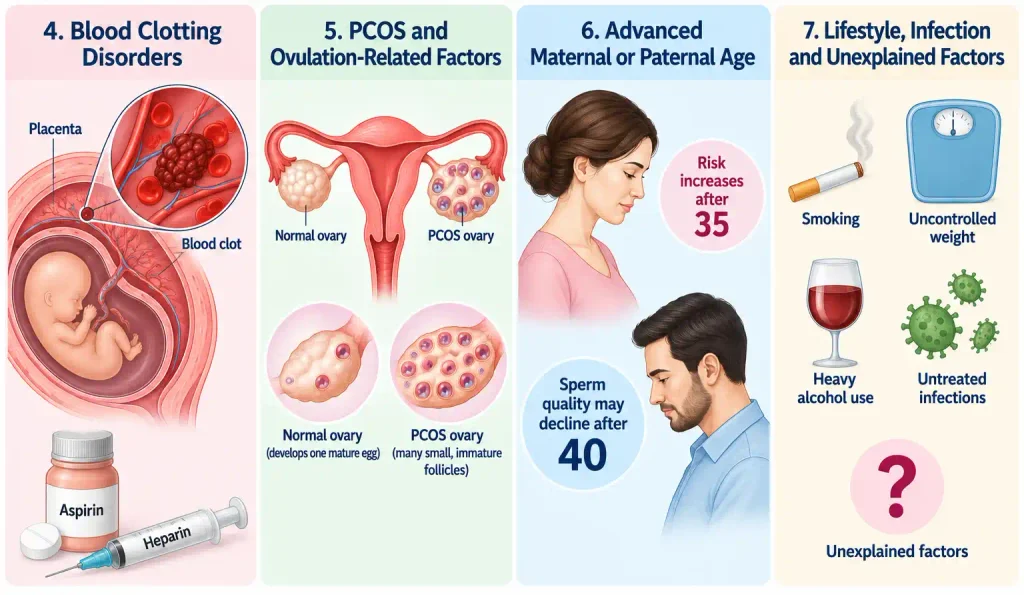
Can a blood clotting disorder cause pregnancy loss? Yes, and treatment can make a real difference here. Antiphospholipid syndrome, sometimes called “sticky blood,” is an autoimmune condition where blood clots more easily than it should, and tiny clots can block flow to the developing placenta. It is one of the few causes where a specific blood-thinning medicine in a future pregnancy meaningfully improves outcomes.
5. PCOS and Ovulation-Related Factors
Polycystic ovary syndrome, or PCOS, is a hormonal condition where the ovaries produce excess androgens and develop many small, immature follicles, showing up in recurrent miscarriage patients almost twice as often as in the general population. The exact link is debated, but insulin resistance and hormonal imbalance both appear to play a role. Our PCOS overview explains how it is diagnosed and managed here in Vapi.
6. Advanced Maternal or Paternal Age
Egg quality declines gradually from the mid-thirties onward, directly raising the chance of chromosomal errors in the embryo. Sperm quality also changes with age, including more DNA fragmentation, though it gets less attention. For couples where the woman is over 35 and the man over 40, we recommend starting evaluation after two losses rather than three.
7. Lifestyle, Infection and Unexplained Factors
Smoking, uncontrolled weight, heavy alcohol use, and untreated infections can each raise miscarriage risk slightly, though none alone usually explains a full pattern of loss.
For close to half of couples, even a complete workup finds nothing definite. This is reassuring, since unexplained recurrent miscarriage still carries good odds of success next time, with close monitoring.
“The hardest sentence I say to a patient is ‘we found no cause.’ But I have learned to say it differently now: your tests are normal, and that is actually good news for your next pregnancy.” — Dr. Kaushal Patel
Which Tests Are Recommended After Recurrent Pregnancy Loss?
A proper workup is methodical, not a single scan. At iSHA, the standard evaluation usually includes:
- Blood tests for thyroid function (TSH), prolactin, and blood sugar control
- Antiphospholipid antibody testing, done on two occasions at least 12 weeks apart
- Karyotyping (chromosome testing) for both partners
- A pelvic ultrasound to check the shape and lining of the uterus
- Hysteroscopy, where the uterine cavity needs a direct look
- Semen analysis for the male partner
- Genetic testing of pregnancy tissue, when available, after a third loss
1. What Is a Hysteroscopy and Why Is It Done?
Hysteroscopy is a short procedure where a thin, lighted camera passes through the vagina and cervix to look directly inside the uterine cavity. No cuts are made on the abdomen, and it is usually a day procedure.
It lets us see and often immediately treat a septum, polyp, or scar tissue in the same sitting. Read more about hysteroscopy at our Vapi centre.
Comparing Causes, Tests and Treatment Approaches
| Suspected Cause | Key Test | Typical Treatment |
|---|---|---|
| Chromosomal (embryo or parent) | Karyotype, genetic testing of tissue | Genetic counselling; IVF with PGT-A in select cases |
| Uterine abnormality | Ultrasound, hysteroscopy | Hysteroscopic surgery |
| Thyroid or hormonal | TSH, prolactin, blood sugar | Medication to normalise hormone levels |
| Blood clotting (APS) | Antiphospholipid antibody panel | Low-dose aspirin and/or heparin injections |
| PCOS | Hormone profile, pelvic ultrasound | Weight and insulin management, ovulation support |
| Age-related | AMH, semen analysis | Individualised fertility planning, IVF if needed |
| Unexplained | Full panel, all normal | Close monitoring, early scans, emotional support |
How Is Recurrent Miscarriage Treated When a Cause Is Identified?
Treatment follows the cause, not a generic protocol. A uterine septum gets corrected with hysteroscopic surgery, a clotting disorder gets managed with blood thinners started early in the next pregnancy, and a thyroid imbalance gets brought into range before you try again.
Genetic causes need a different conversation. When repeated losses trace back to chromosomally abnormal embryos, or a parent carries a balanced translocation, selecting a chromosomally normal embryo before transfer changes the odds meaningfully. This is where preimplantation genetic testing, or PGT-A, fits in.
1. How PGT-A Fits Into the Picture
During an IVF cycle, embryos can be tested for the correct number of chromosomes before one is transferred. This does not treat the underlying cause, but it lets us choose the embryo most likely to implant and grow.
For couples already grieving genetic-cause miscarriages, this is often the most direct route to success. Learn more about our PGT-A testing process in Vapi.
Nobody walks in thinking about IVF on day one. It tends to arrive later, once testing points toward a genetic explanation, and becomes the next logical step rather than a leap.
Can Recurrent Miscarriage Be Treated If No Clear Cause Is Found?
Yes, and this surprises a lot of couples. Close monitoring in the next pregnancy, including early ultrasounds and progesterone support where indicated, improves outcomes even without a diagnosis, and most couples with unexplained recurrent miscarriage go on to have a successful pregnancy without dramatic intervention.
How Long Should a Couple Wait After a Miscarriage Before Trying Again?
Medically, one normal menstrual cycle is often enough for the body to be ready again, though emotionally that timeline rarely matches. What matters more is whether necessary testing is complete: if you have had two or more losses, finish the relevant blood tests and scans before your next attempt, so any treatable cause gets addressed first.
How Can Recurrent Miscarriage Be Prevented in a Future Pregnancy?
Prevention depends on what testing reveals, but a few steps help almost everyone:
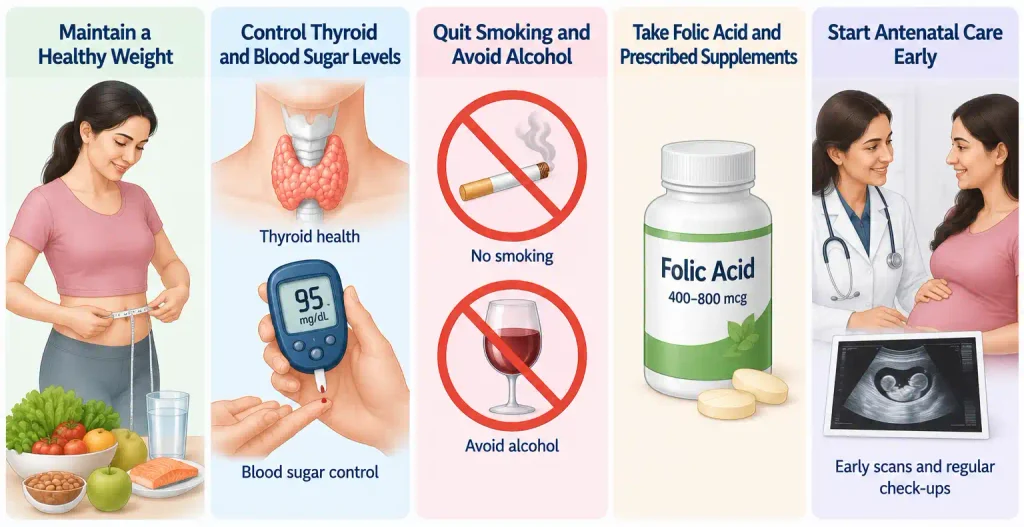
- Reaching a healthy body weight before conception, where relevant
- Getting thyroid and blood sugar levels controlled ahead of trying again
- Quitting smoking and cutting back alcohol completely
- Taking folic acid and any specifically prescribed supplements
- Starting antenatal care and scans earlier than a typical first pregnancy
What Should Be Done After a Third Miscarriage?
A third loss is the point where a full, formal workup should begin if it has not already, covering chromosome testing for both partners, a uterine assessment, thyroid and clotting screens, and testing of the pregnancy tissue where available. Waiting for a fourth loss rarely serves anyone well.
Recurrent Miscarriage Treatment in Vapi: Access for South Gujarat Couples
Couples across South Gujarat have historically travelled to Mumbai or Ahmedabad for a proper recurrent miscarriage workup. That gap is closing.
Women from Vapi, Daman, Silvassa, Valsad, Umargam and Navsari can now complete the entire evaluation, including hormone testing, hysteroscopy, and karyotyping, at iSHA without long-distance travel. For a woman already grieving a loss, not repeating her history to a new doctor every few weeks matters.
If you are searching for a pregnancy loss specialist in Daman, miscarriage care in Silvassa, or a fertility clinic in Valsad for pregnancy loss, the same clinic in Vapi serves all these areas. Couples needing IVF with PGT-A next can continue treatment locally through our Valsad, Daman, and Silvassa centres.
When Should You See a Recurrent Miscarriage Specialist in Vapi?
See a specialist after two losses if you are over 35, after any second-trimester loss at any age, or after three first-trimester losses. Still trying to conceive for the first time and it has been over a year? Our fertility evaluation study is a useful starting point.
Dr. Kaushal’s Advice: What I Tell Every Couple in This Chair
Grief after a miscarriage is not a phase to rush through before “real” treatment begins. It is part of the treatment, and couples deserve permission to feel it fully first.
Clinically, my advice stays simple: do not wait through three losses in silence past 35, do not accept “it’s just bad luck” without a basic panel of tests, and do not assume a normal result means nothing can be done.
“I have watched couples walk into this clinic convinced their bodies had failed them, and walk out nine months later with a healthy baby. The tests exist to remove blame, not to assign it.” — Dr. Kaushal Patel
Final Thought
Recurrent miscarriage takes something from a couple that no test result can fully give back, and that loss deserves acknowledgment first. What testing and treatment offer is clarity, a real answer to why this keeps happening, and usually a genuine path toward a healthy pregnancy.
If you have been through this more than once, book a consultation at iSHA Women’s Hospital, Vapi, and let the workup begin at your pace.
Frequently Asked Questions
1. Why does recurrent miscarriage keep happening?
It usually keeps happening because an underlying, treatable factor, such as a chromosomal issue, a uterine abnormality, or a hormonal imbalance, is present but has not yet been identified. In about half of cases, no cause is ever found, and these pregnancies often succeed once monitored closely.
2. What causes recurrent miscarriage and repeated pregnancy loss?
The main causes fall into seven groups: chromosomal abnormalities, uterine problems, thyroid or hormonal disorders, blood clotting conditions, PCOS-related factors, advancing maternal or paternal age, and lifestyle or infection-related issues. Around half of all cases remain unexplained even after full testing.
3. What should be done after a third miscarriage?
A complete workup should begin, covering chromosome testing for both partners, a uterine evaluation, thyroid and clotting panels, and genetic testing of the pregnancy tissue if available. This directs the right treatment before trying again.
4. Which tests are recommended after recurrent pregnancy loss? Can a uterine problem cause repeated miscarriage?
Recommended tests include thyroid and blood sugar panels, antiphospholipid antibody testing, karyotyping for both partners, a pelvic ultrasound, and hysteroscopy. Yes, uterine problems like a septum, fibroids, or scar tissue can cause repeated miscarriage, and many are correctable with a day-care procedure.
5. Is there a link between thyroid disorders and recurrent miscarriage?
Yes, both underactive and overactive thyroid conditions can disrupt the hormonal balance a pregnancy depends on, raising miscarriage risk. A simple TSH blood test identifies this, and thyroid medication before conception often resolves the issue.
6. Can a blood clotting disorder cause pregnancy loss?
Yes, conditions like antiphospholipid syndrome make blood clot more easily and can restrict flow to the developing placenta. This is one of the more treatable causes, managed with low-dose aspirin or heparin injections in a future pregnancy.
7. Are chromosomal problems a common cause of recurrent miscarriage?
Yes, they are the single most common identifiable cause, responsible for roughly half of all early pregnancy losses. Risk rises with maternal age, and in some couples, one partner carries a chromosome rearrangement affecting embryo development.
8. What is a hysteroscopy and why is it done after repeated miscarriages?
Hysteroscopy is a minor procedure where a thin camera passes through the vagina and cervix to directly view the uterine cavity, with no abdominal cuts. It is done to detect and often immediately treat structural issues like a septum, polyp, or scar tissue interfering with implantation.
9. How is recurrent miscarriage treated when a cause is identified?
Treatment matches the specific cause found: surgery for uterine abnormalities, medication for thyroid or clotting disorders, and hormonal management for PCOS-related cases. When the cause is genetic, IVF with PGT-A embryo testing is often recommended to select a chromosomally normal embryo before transfer.
10. Can recurrent miscarriage be treated if no clear cause is found?
Yes, even without a diagnosis, close monitoring in the next pregnancy through early ultrasounds and, where indicated, progesterone support meaningfully improves outcomes. Most couples with unexplained recurrent miscarriage go on to have a healthy pregnancy without major intervention.
11. How can recurrent miscarriage be prevented in a future pregnancy?
Prevention depends on the cause, but general steps include reaching a healthy weight, controlling thyroid and blood sugar levels, stopping smoking and alcohol, taking folic acid, and starting antenatal monitoring earlier than usual. Addressing any identified cause before conceiving again offers the strongest protection.
12. How long should a couple wait after a miscarriage before trying again?
Physically, one normal menstrual cycle is often enough for the body to be ready again. It is generally more useful to wait until recommended testing is complete, so a treatable cause can be addressed, rather than following a fixed number of months.
13. When should you see a recurrent miscarriage specialist in Vapi?
See a specialist after two losses if you are over 35, after any second-trimester loss, or after three first-trimester losses regardless of age. Earlier evaluation is always reasonable if the losses feel unusual or particularly distressing.
14. Where can couples from Daman, Silvassa and Valsad get recurrent miscarriage treatment?
Couples from Daman, Silvassa, Valsad, and nearby areas can get complete recurrent miscarriage evaluation and treatment at iSHA in Vapi, including hormone testing, hysteroscopy, karyotyping, and IVF with PGT-A where needed. Follow-up IVF treatment is also available locally through iSHA’s centres in Valsad, Daman, and Silvassa.