
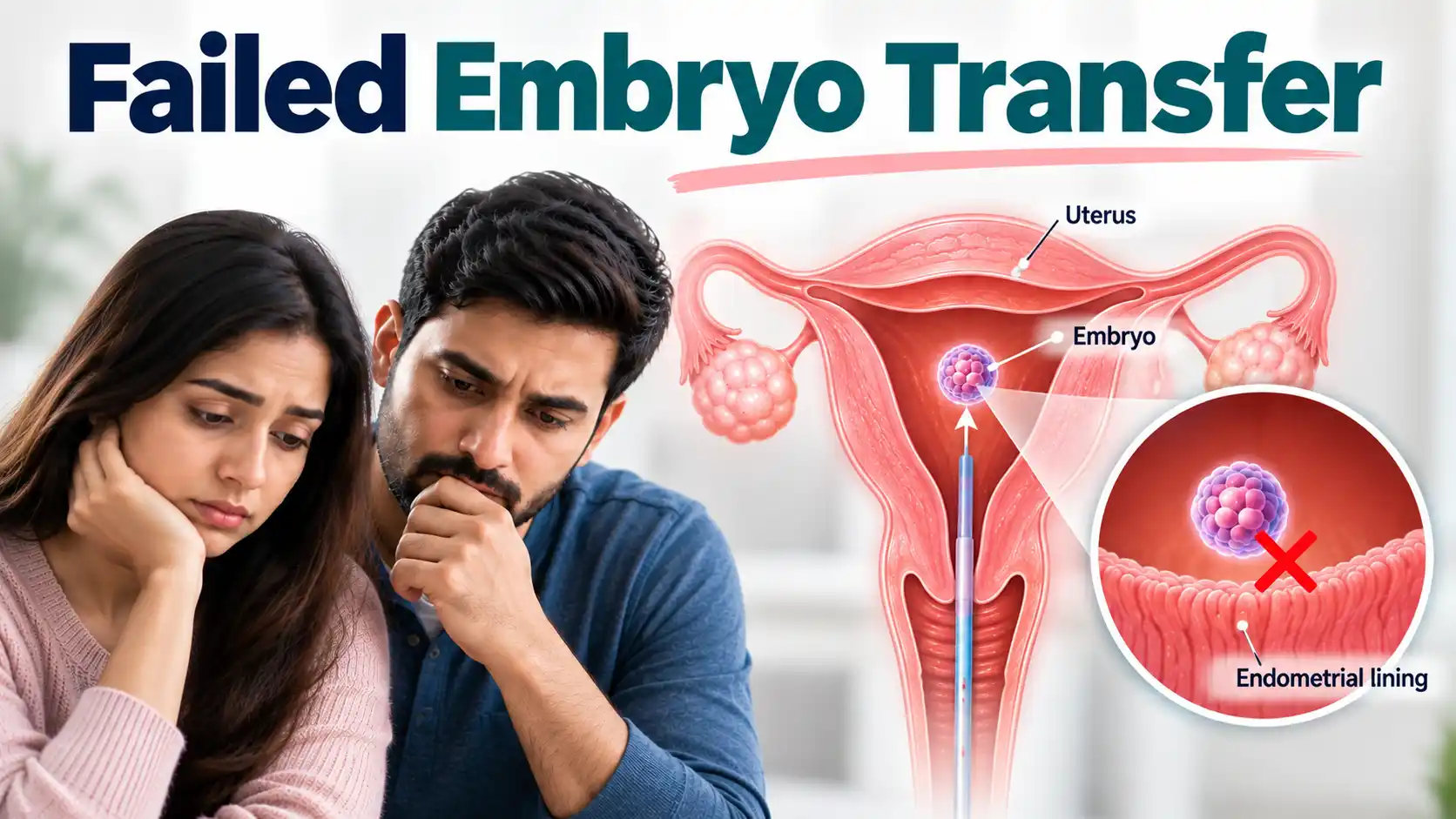
The two week wait ends with a single line on the test, and the room goes quiet. You did everything right. You took every injection on time. You rested. And still, nothing.
If you are searching for answers after a failed embryo transfer in Vapi, you are not alone, and you are not out of options. A transfer that does not work is painful, but it is also information. It tells your doctor where to look next.
Most couples move straight to “when can we try again?”. A better question is “what should we check first?”. The right checks between cycles often matter more than simply repeating the same protocol.
Key Takeaways
- Not every transfer works, even in good clinics. IVF birth rates per embryo transferred fall with age, from roughly a third in women under 35 to single digits after 42.
- The embryo is only half the story. Implantation needs a receptive uterus, the right timing, and a healthy endometrial lining.
- Hidden uterine problems are common. Unsuspected cavity findings such as polyps, adhesions and small fibroids in a meaningful share of women with repeated implantation failure, even when ultrasound looked normal.
- Endometrial thickness matters, but so does pattern. A lining under about 7 mm is linked to lower pregnancy rates, though thin linings still produce healthy pregnancies.
- Male factors are often skipped. Sperm DNA damage can affect embryo development after fertilisation, so a semen check is worth repeating after failure.
- One failed cycle is not a verdict. Many couples conceive on the second or third transfer once a specific, correctable issue is found and fixed.
What a Failed Embryo Transfer Actually Means
An embryo transfer fails when the embryo does not implant in the uterine lining, or implants briefly and stops. The pregnancy test stays negative, or shows a very low beta hCG that falls.
That is different from a miscarriage, where a pregnancy is confirmed and then lost. The causes overlap, but the testing path is not the same. If your losses happen after a positive test, recurrent miscarriage follows a separate evaluation.
“A negative transfer is not a failed patient. It is a missing piece of information, and our job is to find it before we ask you to go through another cycle.” Dr. Kaushal Patel
Implantation failure versus repeated implantation failure
Doctors usually treat these as two different situations:
- One negative transfer: often bad luck, mostly chromosomal. A focused review is enough.
- Two or more failed transfers with good quality embryos: this is called repeated or recurrent implantation failure, and it calls for a full workup.
Why an Embryo Transfer Can Fail Even When Embryo Quality Looks Good
Grading tells us how an embryo looks, not what it carries inside. A beautiful blastocyst can still have an extra or missing chromosome. Those embryos usually stop before or just after implantation.
Chromosomal errors rise sharply with egg age. That single fact explains a large share of failed implantation IVF cycles in women over 37.
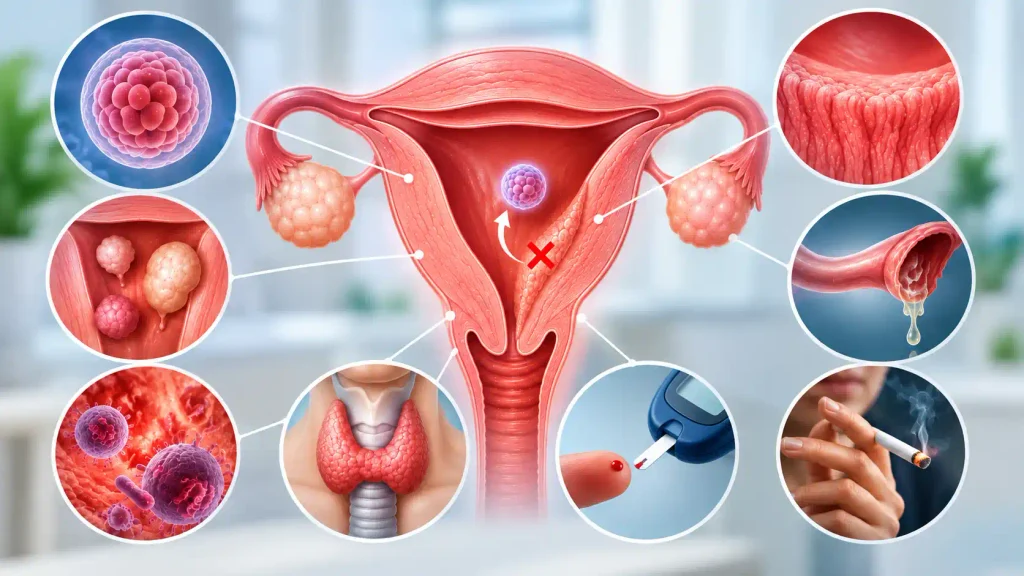
Other reasons a good embryo fails to stick:
- The lining was not receptive on the day of transfer
- A polyp, adhesion or fibroid distorted the uterine cavity
- Fluid in the cavity or a blocked, swollen tube leaked back into the uterus
- Infection or chronic inflammation of the lining
- Uncontrolled thyroid disease, high prolactin, diabetes or obesity
- Smoking or tobacco use, including chewed tobacco
Checking the Uterus: Endometrial Lining and Uterine Cavity
The uterus gets the closest look after a failed cycle, because most correctable problems live here.
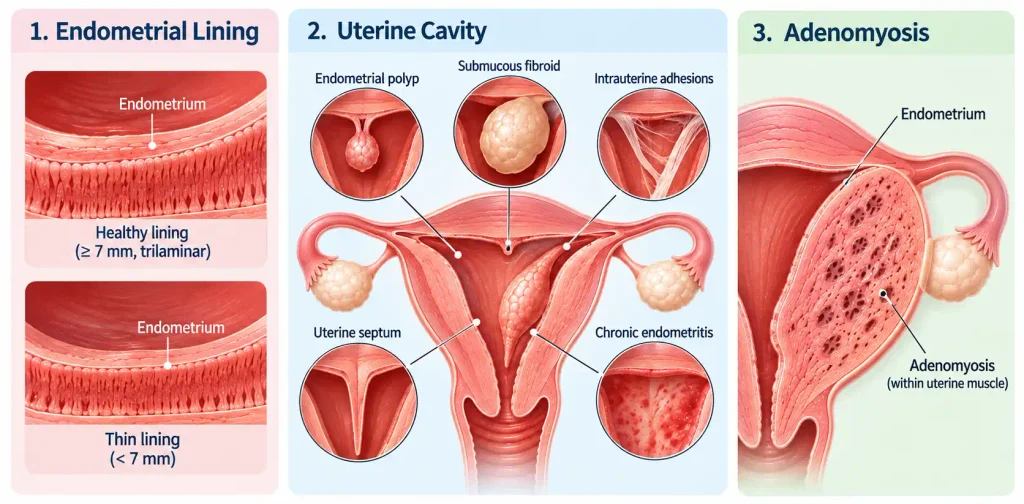
1. Endometrial lining
On the day progesterone starts, most clinics want a trilaminar lining of roughly 7 mm or more. Below that, pregnancy rates tend to drop, though good outcomes still happen.
Causes of a poor lining include past curettage, infection, adhesions, long term oral contraceptive use, and reduced blood flow.
“Patients ask me for a magic number for lining thickness. I look at thickness, pattern and blood flow together, because a 7 mm lining with a clean cavity often beats a 9 mm lining with a polyp sitting in it.” Dr. Kaushal Patel
2. The uterine cavity
A routine scan can miss small lesions. A saline infusion scan or a direct camera check gives a much clearer picture of the uterine cavity.
Common findings that change the plan:
- Endometrial polyps: small, easily removed, and a frequent surprise
- Submucous fibroids: even small ones can block implantation.
- Intrauterine adhesions: scar tissue from an earlier procedure or infection
- Uterine septum: a congenital wall inside the cavity
- Chronic endometritis: silent, low grade inflammation that usually responds to antibiotics
3. Adenomyosis
Adenomyosis means the lining tissue grows into the muscle of the uterus. It causes heavy, painful periods and a bulky uterus on scan.
It is linked with lower implantation rates, partly through abnormal uterine contractions and inflammation. Treatment before transfer usually means a short course of hormonal suppression, then a frozen transfer once the uterus settles.
When Hysteroscopy Is Recommended After Embryo Transfer Failure
Hysteroscopy is a short day care procedure. A thin camera passes through the cervix, so your doctor can see the cavity directly and treat what is found in the same sitting.
A hysteroscopy in Vapi is usually advised when:
- Two or more good embryos have failed to implant
- Ultrasound or saline scan suggests a polyp, fibroid, septum or adhesion
- Periods became lighter or stopped after an earlier procedure
- There is a history of pelvic infection or tuberculosis exposure
- The lining consistently stays thin despite treatment
You can see how the procedure is done, and what recovery looks like, on our hysteroscopy page. Most women go home the same day and resume normal activity within 24 to 48 hours.
Rechecking the Embryo Side
1. Should embryo quality be reassessed?
Yes, and honestly. Your lab report should tell you the fertilisation rate, how many embryos reached blastocyst, the grade of each, and how they were frozen and thawed.
If very few eggs are fertilised or very few reach day five, the problem may sit in egg quality, sperm quality or the stimulation protocol rather than the uterus. Changing the protocol, adjusting trigger timing, or moving to IVF with ICSI can shift those numbers.
2. Genetic testing of embryos
Genetic screening checks the chromosome count of an embryo before transfer. It does not improve an embryo, it only helps choose better among what you have.
It is most useful for women over 35, after repeated failure, or after multiple losses. Our page on PGT-A covers who genuinely benefits and who can safely skip it.
The Sperm Side: DNA Fragmentation
A normal semen report checks count, movement and shape. It does not check the DNA inside the sperm head.
High sperm DNA fragmentation is linked to poor blastocyst development and lower implantation. It is worth testing when embryos repeatedly arrest, or when transfers keep failing with no uterine cause.
What often helps:
- Treating varicocele, infection or fever related damage
- Stopping tobacco, gutka and alcohol for at least three months
- Reducing heat exposure from long factory shifts and tight clothing
- Weight loss, better sleep and control of diabetes
- Antioxidant therapy under supervision, plus a shorter abstinence gap before collection
Body and Hormone Checks That Often Get Missed
Small medical issues can quietly reduce your chance of implantation.
| What is checked | Why it matters after a failed transfer | Typical action |
|---|---|---|
| Thyroid (TSH) | Even mild underactivity lowers implantation | Adjust thyroxine before the next cycle |
| Prolactin | High levels disturb the cycle and lining | Medication, repeat testing |
| Vitamin D | Low levels are very common in India | Correct before transfer |
| HbA1c and weight | Poor sugar control affects egg and lining quality | Diet, exercise, medical support |
| Hydrosalpinx | Tubal fluid can wash into the cavity | Clip or remove the tube first |
| Chronic endometritis | Silent inflammation blocks implantation | Antibiotic course, then retest |
Immune and clotting panels are a grey zone. Mayo Clinic and other major centres caution that many add on treatments lack strong evidence, so they should be used selectively rather than by default.
Transfer Technique and Timing
The transfer itself is a skill dependent step. A difficult catheter passage, a full or empty bladder, or a poorly timed transfer can all reduce the chance of success.
Worth reviewing with your doctor:
- Was the transfer easy, or was a stiff catheter or tenaculum needed?
- Was it done under ultrasound guidance?
- Was progesterone support adequate, and was the blood level checked?
- Would a frozen transfer in a calmer, unstimulated cycle suit you better?
“Sometimes the fix is small. A trial transfer to map the cervix, or a progesterone level checked the day before, can quietly change the outcome of the next cycle.” Dr. Kaushal Patel
After One Failure Versus Repeated Failure
| After one failed transfer | After two or more failures | |
|---|---|---|
| Likely cause | Mostly chromosomal chance | Higher chance of a specific correctable factor |
| Uterine check | Ultrasound, saline scan if unclear | Hysteroscopy, endometrial sampling |
| Embryo plan | Transfer the next frozen embryo | Consider genetic screening, protocol change |
| Male testing | Repeat semen analysis | Add sperm DNA fragmentation testing |
| Hormone work | Thyroid, prolactin, vitamin D | Add HbA1c, full metabolic and infection review |
| Usual wait | One natural cycle | Longer, depending on treatment needed |
| Emotional support | Counselling offered | Strongly recommended |
Tests a Fertility Specialist in Vapi May Advise
After reviewing your file, a fertility specialist in Vapi will usually pick from this list rather than ordering everything:
- Transvaginal ultrasound with endometrial and blood flow assessment
- Saline infusion sonography or diagnostic hysteroscopy
- Endometrial biopsy for chronic endometritis where suspected
- Thyroid, prolactin, vitamin D, HbA1c and AMH
- Repeat semen analysis with DNA fragmentation if indicated
- Karyotype for both partners after repeated failure
- Review of the full embryology report from the previous cycle
Targeted testing keeps costs sensible. Blanket panels rarely change the plan and often add anxiety.
How Soon Can You Try Again?
Medically, most women can start a frozen transfer after one normal period. There is no proven benefit in waiting many months if no treatment is needed.
The timing changes if something must be corrected first. A polyp removal or hysteroscopy usually needs one cycle of healing. Adenomyosis suppression may need two to three months.
Emotional readiness counts too. Going back too soon, while still grieving, makes the next cycle harder to bear.
What Can Change Before the Next Transfer
Changing something meaningful is the point of the review. Options your doctor may discuss include:
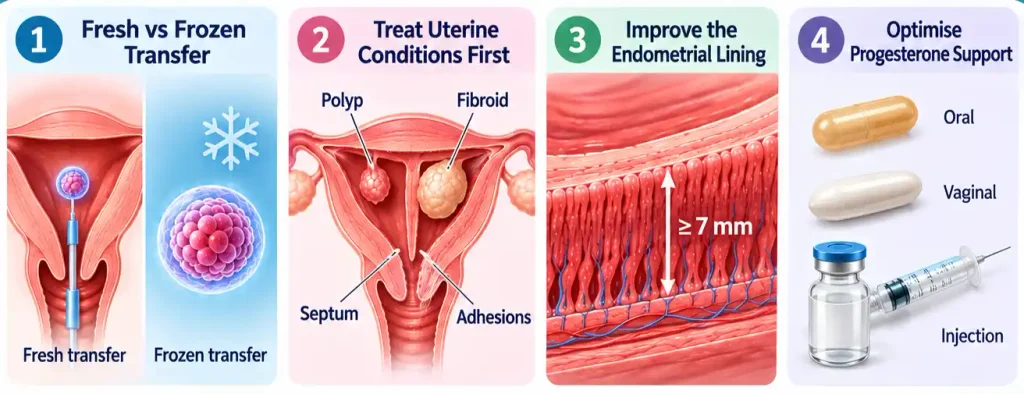
- Switching from a fresh to a frozen transfer
- Treating a polyp, fibroid, septum or adhesion first
- Improving the lining with adjusted oestrogen, longer priming or added measures
- Extra progesterone support, or a different route of progesterone
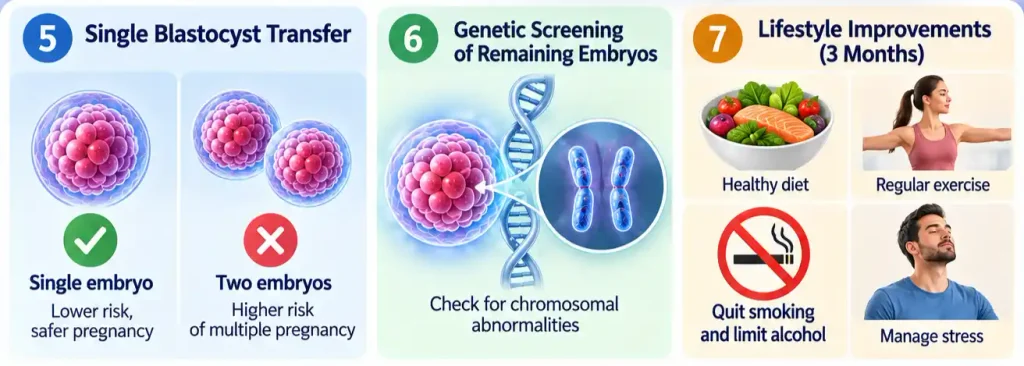
- Single blastocyst transfer instead of two embryos, to reduce risk
- Genetic screening of remaining embryos
- Three months of lifestyle work by both partners before the cycle
When to Consult an IVF Doctor in Vapi
Book a review rather than waiting if any of the following applies:
- Two or more embryos have failed to implant
- Your lining never crosses 7 mm
- You have heavy, painful periods or a known fibroid
- Periods became scanty after a curettage or infection
- Your partner’s semen report was borderline or never repeated
- You are over 37 and want to use time wisely
A structured second opinion is reasonable at any point. Bring your discharge summaries, scan reports and embryology sheets, since those documents carry the real answers.
About the Author
Dr. Kaushal Patel is a fertility specialist at iSHA Care, Vapi, with years of experience in IVF, ICSI, hysteroscopic surgery and the care of couples facing repeated implantation failure. He works with patients across Vapi, Valsad, Silvassa and Daman, and believes in explaining every option in plain language before any decision is made.
“I tell every couple the same thing after a failed cycle. Give me one honest review before the next transfer. Most of the time we find something we can improve, and that makes the next attempt a real attempt, not a repeat.” Dr. Kaushal Patel
Final Thought
A failed embryo transfer in Vapi feels like an ending. Clinically, it is closer to a checkpoint. The couples who do best are the ones who pause, review honestly, fix what can be fixed, and then try again with a plan that actually looks different from the last one.
You deserve clear answers before you go through another cycle, not just another date on the calendar. Book an appointment with Dr. Kaushal Patel at Isha Care.
Frequently Asked Questions
1. What should be checked after a failed embryo transfer in Vapi before trying again?
Your doctor should review the uterine cavity, endometrial lining, embryo and lab reports, hormone levels and the semen analysis. A saline scan or hysteroscopy is often added when the cavity was never examined directly. The aim is to find one or two correctable factors rather than repeat the same cycle blindly.
2. Why can an embryo transfer fail even when the embryo quality is good?
Grading shows how an embryo looks, not which chromosomes it carries, so a top grade blastocyst can still be genetically abnormal. Timing, lining receptivity and hidden uterine problems also matter. Good quality embryos improve the odds, but they cannot guarantee implantation.
3. Can a thin endometrial lining cause failed implantation IVF?
Yes. A lining that stays below about 7 mm is linked with lower pregnancy rates, though some women still conceive with thinner linings. Treatment focuses on the cause, whether that is scarring, infection, poor blood flow or a short oestrogen phase.
4. Should the uterine cavity be checked after an unsuccessful embryo transfer?
In most cases, yes. Routine ultrasound misses small polyps, adhesions and submucous fibroids. A saline infusion scan or hysteroscopy gives a far clearer view, and anything found can often be treated in the same sitting.
5. When is hysteroscopy recommended after embryo transfer failure?
It is usually advised after two failed transfers with good embryos, or earlier if a scan suggests a polyp, fibroid, septum or scarring. It also helps when periods became lighter after a previous procedure. Hysteroscopy in Vapi is a day care procedure with quick recovery.
6. Can fibroids or polyps affect embryo implantation during IVF?
Yes, especially when they sit inside or press into the cavity. Even small submucous fibroids and polyps can disturb the lining and block implantation. Removing them before the next transfer is often the single most useful step.
7. Can adenomyosis contribute to IVF implantation failure?
Adenomyosis is associated with reduced implantation, through inflammation and abnormal uterine contractions. It is suspected when periods are heavy and painful and the uterus looks bulky on scan. A few months of hormonal suppression before a frozen transfer often improves the situation.
8. Should embryo quality be reassessed after a failed embryo transfer?
Yes, by going through the full embryology report rather than a single grade. Fertilisation rate, blastocyst conversion and freezing survival all reveal useful patterns. If those numbers are weak, the stimulation protocol or the sperm may need attention before the next transfer.
9. Can sperm DNA fragmentation contribute to embryo transfer failure?
It can, because standard semen tests do not measure DNA damage inside the sperm. High fragmentation is linked with poor blastocyst development and lower implantation. Treating varicocele or infection, quitting tobacco and supervised antioxidants over three months can improve results.
10. What tests may a fertility specialist in Vapi recommend after failed implantation?
Common tests include a detailed ultrasound, saline scan or hysteroscopy, thyroid, prolactin, vitamin D and HbA1c, and a repeat semen analysis. Endometrial biopsy, genetic screening of embryos or karyotype may be added after repeated failure. Testing should be targeted to your history, not ordered as a bulk package.
11. Is hysteroscopy necessary before another embryo transfer?
It is not needed for every patient. Women with a normal cavity on a good quality scan and only one failed transfer can usually proceed without it. After repeated failure, or when any abnormality is suspected, it becomes genuinely worthwhile.
12. How soon can you try another embryo transfer after a failed IVF cycle?
Most women can plan a frozen transfer after one normal period, provided nothing needs correcting. If surgery or adenomyosis treatment is planned, expect one to three months of preparation. Emotional recovery should guide the timing as much as the calendar.
13. Does one failed embryo transfer mean the next IVF attempt may also fail?
No. A single negative result says very little about your overall chances, and many couples conceive on the second or third transfer. Success rates improve when the review identifies a specific factor and the plan changes accordingly.
14. When should you consult an IVF doctor in Vapi after a failed embryo transfer?
See your doctor once the initial disappointment settles, ideally within four to six weeks. Do not wait if you have two or more failures, a persistently thin lining, heavy painful periods or a known fibroid. An IVF doctor in Vapi can plan the review while you take a break from treatment.
15. What can be changed before the next embryo transfer after IVF implantation failure?
Possible changes include moving to a frozen transfer, correcting a uterine problem, improving the lining, adjusting progesterone support, and selecting embryos with genetic screening. Three months of lifestyle work by both partners also makes a measurable difference. The goal is to change something informed, not everything at once.