
Your ultrasound report just flagged a fibroid, and your mind jumped straight to one question: can I still have a baby. That reaction is completely normal, and it is one of the most common reasons women from Vapi and the surrounding towns walk into our clinic.
Uterine fibroids and fertility have a more complicated relationship than most people assume, but it is rarely as frightening as it first sounds. Most fibroids never touch your ability to conceive. A few types do, and knowing which is which changes everything about how you plan your next step toward pregnancy.
Key Takeaways
- Fibroids are extremely common. Up to 70 to 80 percent of women develop one by age 50, and most never cause a problem.
- Fibroids are the sole cause of infertility in only about 2 to 4 percent of women, according to research published through the National Institutes of Health.
- Location matters more than size. Submucosal fibroids, which grow into the uterine cavity, affect fertility the most. Fibroids on the outer wall usually do not.
- Not every fibroid needs surgery. Many small, symptom-free fibroids can simply be watched while you try to conceive.
- When surgery is needed, laparoscopic myomectomy is often preferred because it protects the uterus and allows faster recovery.
- If pregnancy still does not happen after fibroid removal, IVF remains a dependable path forward.
What Are Uterine Fibroids?
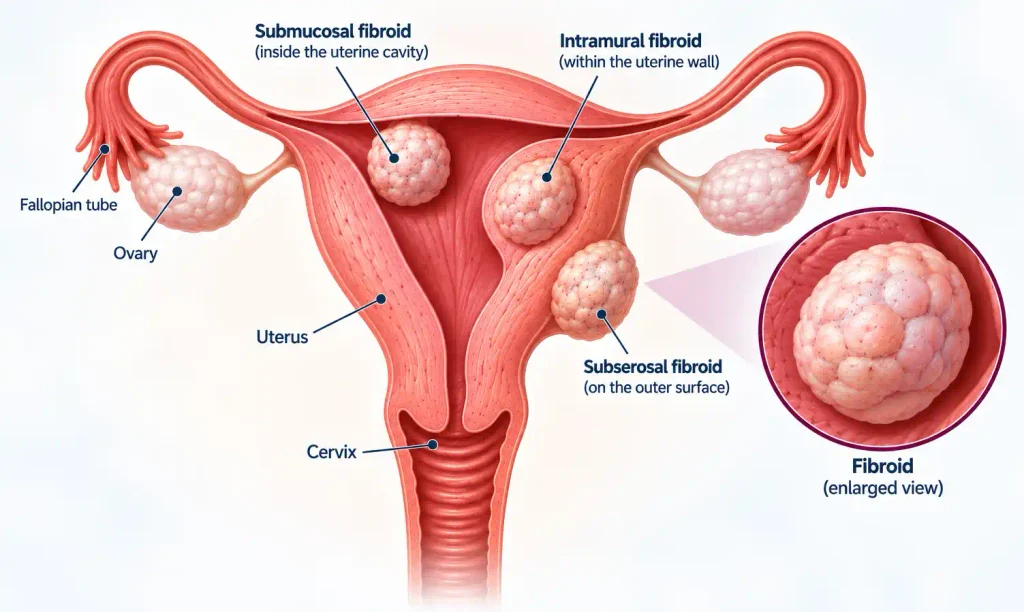
Fibroids are non-cancerous growths made of muscle and fibrous tissue that develop in or on the wall of the uterus. Doctors also call them myomas or leiomyomas. They almost never turn into cancer, and their size can range from a small seed to something as large as a grapefruit.
Fibroids grow in response to the hormones estrogen and progesterone, which is why they usually appear during the reproductive years and often shrink after menopause. Our fibroid care program sees women of every age, most of whom are simply surprised to learn they have one.
What Are the Common Symptoms of Fibroids?
Many fibroids cause no symptoms whatsoever and are found only during a routine scan. When symptoms do appear, they usually include:
- Heavy or prolonged periods
- Pelvic pressure or a feeling of fullness
- Frequent urination
- Lower back pain
- Pain during intercourse
- A visibly enlarged lower abdomen
Recognising several of these does not automatically mean a fertility problem. It means an evaluation is worth doing.
That Fear After Seeing “Fibroid” on Your Ultrasound Report
“Nine out of ten women I meet after a fibroid diagnosis are more frightened by the word than by the actual finding. Once we look at the size, location, and your fertility goals together, the picture almost always looks calmer than the report sounded.” Dr. Kaushal Patel
A fibroid on paper and a fibroid that threatens your pregnancy plans are two different things. Small, well-placed fibroids show up on routine scans constantly, in women who go on to conceive without trouble. The report is a starting point for a conversation, not a verdict.
Which Fibroids Affect Fertility, and Which Usually Don’t
Not all fibroids carry the same weight when it comes to conceiving. What matters most is where the fibroid sits, not just how big it is.
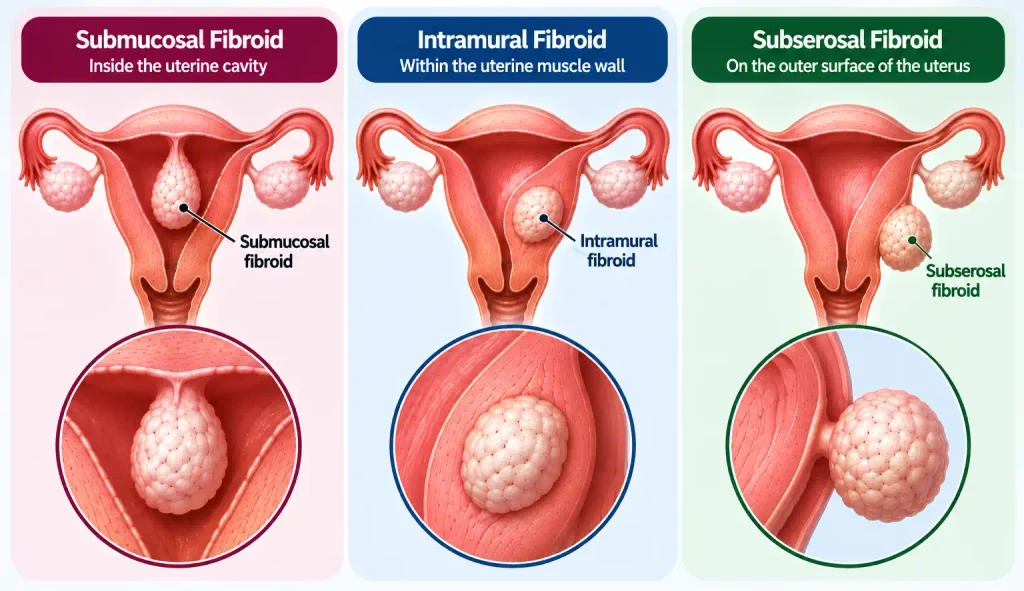
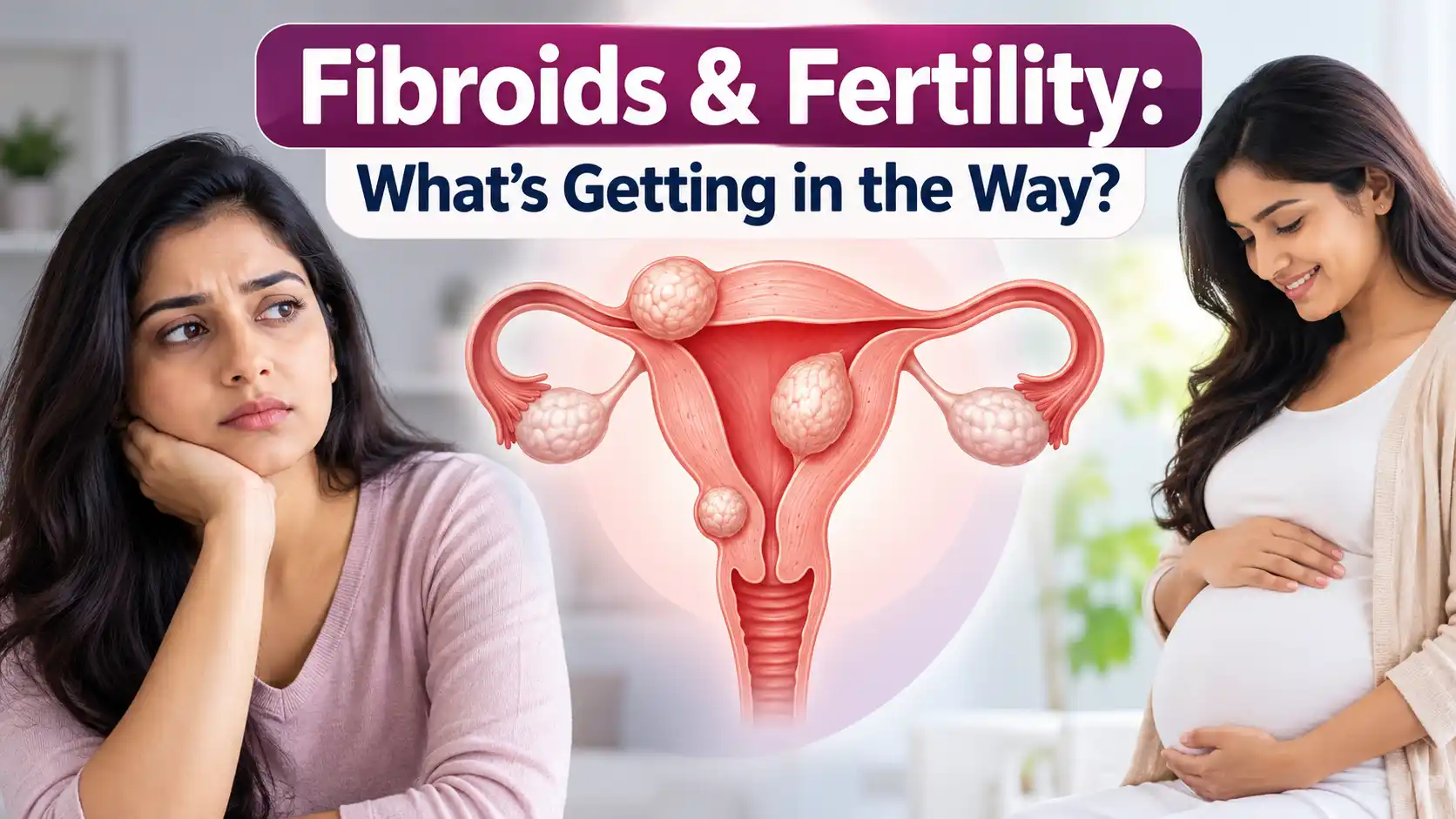
1. Submucosal fibroids
A submucosal fibroid grows just under the endometrium, the soft lining inside the uterus where an embryo needs to implant and grow. Because it pushes into the uterine cavity, it can physically block implantation or disrupt blood flow to the lining. Among all fibroid types, submucosal fibroids affect fertility the most and are the ones most often recommended for removal before trying to conceive.
2. Intramural fibroids
These grow within the muscular wall of the uterus itself. Small ones rarely interfere with pregnancy. Larger or multiple intramural fibroids can distort the cavity indirectly or affect blood supply, so their impact depends heavily on size and number.
3. Subserosal fibroids
Subserosal fibroids grow on the outer surface of the uterus, sometimes on a stalk. They can cause pressure symptoms, but they generally do not touch the uterine cavity or the endometrium, so they rarely interfere with conception.
| Fibroid Type | Where It Grows | Effect on Fertility | Usual Approach |
|---|---|---|---|
| Submucosal | Inside the uterine cavity | High, can block implantation | Often removed before trying to conceive |
| Intramural | Within the uterine muscle wall | Depends on size and number | Removed only if large or symptomatic |
| Subserosal | On the outer surface | Minimal | Usually monitored, rarely removed for fertility alone |
What Fibroid Size Is Considered Risky When Trying to Conceive?
Patients often ask for a single number, but size alone rarely tells the full story. A 2 cm submucosal fibroid inside the cavity can matter more than a 6 cm subserosal fibroid sitting harmlessly outside.
As a general guide, we pay closer attention when:
- Any submucosal fibroid is distorting the uterine cavity, regardless of size
- An intramural fibroid grows beyond 4 to 5 cm
- Multiple fibroids together are changing the shape of the uterus
The scan and its interpretation matter far more than chasing a single cut-off number.
Do Fibroids Affect Pregnancy, and Is There a Link With Miscarriage?
Once you are pregnant, a cavity-distorting fibroid can still cause trouble. It may limit space for the growing baby, raise the chance of a breech position, or contribute to early contractions. There is also a recognised link between submucosal fibroids and pregnancy loss, since a poor implantation site makes an early pregnancy harder to establish securely.
This is one of several reasons doctors run a full fertility evaluation rather than treating a fibroid in isolation, especially for women who have had a previous pregnancy loss. Intramural and subserosal fibroids carry a much lower miscarriage risk in comparison.
When Does Surgery Become Necessary Before Trying to Conceive?
Surgery is not the default answer for every fibroid. It becomes necessary when:
- The fibroid is submucosal and distorting the uterine cavity
- Fibroids are large enough to affect the shape of the uterus
- Heavy bleeding is causing anaemia that could affect a healthy pregnancy
- Previous pregnancy attempts or IVF cycles have failed with a known fibroid present
“I tell my patients that surgery is a tool to remove an obstacle, not a punishment for having a fibroid. If the fibroid is not in the way, we usually leave it alone and focus energy on conception itself.” Dr. Kaushal Patel
What Is a Laparoscopic Myomectomy?
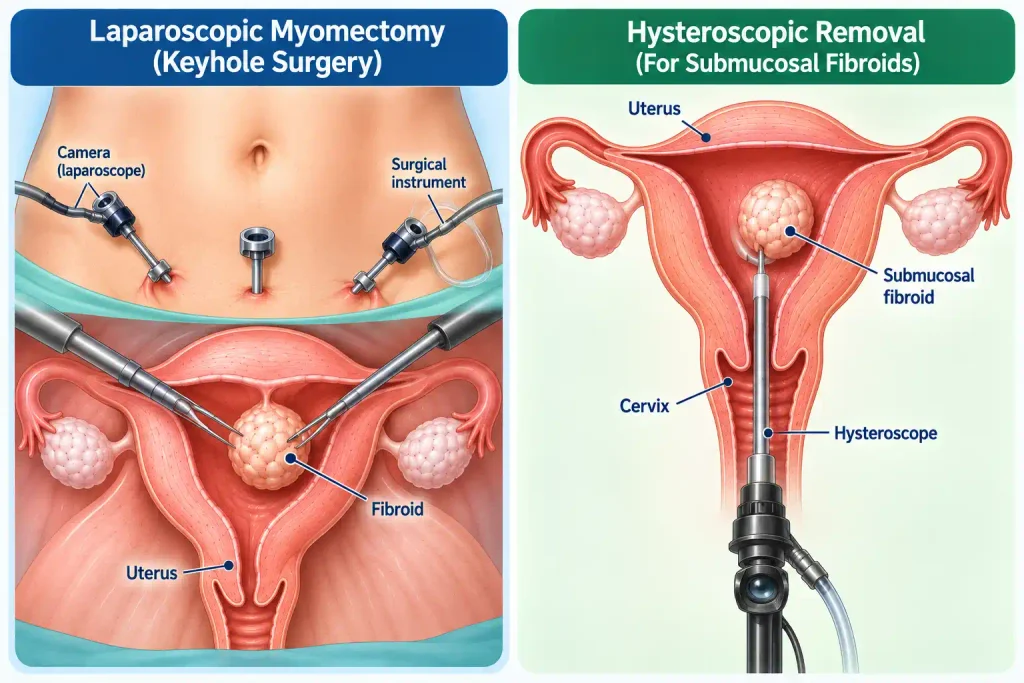
A myomectomy is the surgical removal of a fibroid while keeping the uterus intact, essential for anyone still planning a pregnancy. Laparoscopic surgery, or keyhole surgery, does this through a few small cuts using a thin camera and fine instruments instead of one large incision.
Compared with open surgery, laparoscopic myomectomy usually means less blood loss, a shorter hospital stay, and a faster return to normal life. You can read more about the laparoscopic surgery advantages our team offers for gynaecological conditions.
For submucosal fibroids sitting inside the cavity, we often use a related technique called hysteroscopy, where instruments pass through the natural opening of the cervix with no external cuts at all. Our hysteroscopic removal approach is usually the first choice for this fibroid type specifically.
Fibroid Treatment for Pregnancy in Vapi and Nearby Areas
Women planning pregnancy from Vapi, Daman, Silvassa, Valsad, Umargam, and Navsari often assume advanced fibroid surgery means a long trip to Mumbai or Ahmedabad. That is no longer necessary.
Laparoscopic fibroid surgery in Valsad and the wider region is now available closer to home, and uterine fibroid care in Daman and Silvassa can be managed through one hospital, from diagnosis to surgery to pregnancy follow-up. Fibroid treatment in Vapi at iSHA covers the full pathway: ultrasound assessment, a clear opinion on whether your fibroid actually needs treatment, laparoscopic or hysteroscopic surgery when required, and follow-up through conception. Patients from Dadra and Nagar Haveli travel here for the same reason.
Do Fibroids Shrink on Their Own?
Sometimes, yes. Fibroids depend on estrogen to grow, so they often shrink noticeably after menopause when hormone levels drop. During the reproductive years, small fibroids can also stay stable for years without growing or causing symptoms.
What they rarely do is disappear completely while you are still menstruating regularly. If a fibroid is small, not distorting the cavity, and not causing symptoms, watchful waiting with a repeat scan every 6 to 12 months is often a perfectly reasonable plan while you try to conceive naturally.
Pregnancy After Fibroid Removal, and How IVF Fits In
Most women are advised to wait roughly 3 to 6 months after a myomectomy before actively trying, giving the uterine wall time to heal. After that window, a large number of women conceive naturally, especially when the fibroid removed was the main obstacle.
If pregnancy still does not happen after a reasonable trying period, the surgery has not failed. It usually means another factor, such as age-related egg quality, needs attention too. This is where IVF (in vitro fertilisation, where an egg and sperm are combined in a lab and the resulting embryo is placed into the uterus) becomes a reliable option, particularly once the cavity has been corrected surgically. A repaired uterus gives an IVF embryo a healthier space to implant.
Final Thought
A fibroid on your report is common, not catastrophic. Most fibroids sit quietly and never interfere with a pregnancy at all. The ones that do can almost always be identified early, treated with minimally invasive surgery, and followed by a healthy conception, whether that happens naturally or with a little extra support from IVF. What matters most is getting an honest, individualised opinion rather than assuming the worst from one word on a scan report.
If you’re trying to conceive and have been told you have a fibroid, iSHA Women’s Hospital, Vapi can help you understand what it means for your pregnancy plans and whether any treatment is actually needed.
Frequently Asked Questions
1. Can I get pregnant naturally with uterine fibroids?
Yes, in most cases. Small intramural or subserosal fibroids rarely block conception, and many women carry one through pregnancy without it ever causing an issue.
2. Do fibroids always cause fertility problems?
No. Only a small percentage of women with fibroids face fertility problems from them. The outcome depends far more on where the fibroid sits than on the simple fact that one exists.
3. Which fibroids are most likely to affect fertility?
Submucosal fibroids, which grow inside the uterine cavity, carry the highest risk because they can interfere directly with embryo implantation. Large or multiple intramural fibroids come next, while subserosal fibroids rarely cause any fertility impact.
4. Can a small fibroid prevent pregnancy?
It can, if it is submucosal and sitting inside the cavity, since even a small one in that position can block implantation. A small fibroid anywhere else in the uterus usually has little to no effect on your chances.
5. What fibroid size is considered risky when trying to conceive?
There is no single risky number that applies to everyone. A cavity-distorting submucosal fibroid of any size deserves attention, while an intramural fibroid generally becomes more of a concern once it grows past 4 to 5 cm.
6. What is a submucosal fibroid, and why can it affect fertility?
A submucosal fibroid grows just beneath the endometrium and bulges into the uterine cavity. Because the embryo needs healthy, unobstructed lining to implant, this type of fibroid can physically or functionally interfere with that process.
7. Can fibroids affect embryo implantation?
Yes, particularly submucosal fibroids, which distort the cavity where the embryo needs to attach. Fibroids that do not touch the cavity can still affect local blood flow to the lining, which also matters for implantation.
8. Do fibroids increase the risk of miscarriage during pregnancy?
Submucosal fibroids carry a higher risk of early pregnancy loss because of their effect on the implantation site. Intramural and subserosal fibroids carry much lower risk, and most such pregnancies continue without complication.
9. When is fibroid surgery recommended before trying for a baby?
Surgery is usually recommended when a fibroid is submucosal, when it is distorting the shape of the uterine cavity, or when heavy bleeding from fibroids is affecting your overall health before pregnancy. It is not automatically recommended for every fibroid found on a scan.
10. Can laparoscopic myomectomy improve fertility?
Yes, when the fibroid removed was genuinely in the way. Removing a cavity-distorting fibroid this way often restores normal uterine shape and improves the odds of natural conception or a successful IVF cycle.
11. How long after fibroid removal can I try to get pregnant?
Most doctors suggest waiting around 3 to 6 months after a myomectomy so the uterine wall heals fully before carrying a pregnancy. Your surgeon will confirm the exact timeline based on how deep the incision was.
12. Can fibroids come back after surgery?
New fibroids can develop over time, since myomectomy removes existing growths without changing the underlying tendency to form them. Regular follow-up scans catch any recurrence early.
13. Can fibroids shrink on their own, or do they always need treatment?
Fibroids can shrink on their own, especially after menopause when estrogen levels fall. During reproductive years, many small, symptom-free fibroids simply stay stable and never require any treatment at all.
14. What are the safest fibroid treatment options if I want to become pregnant?
Laparoscopic myomectomy for intramural or subserosal fibroids, and hysteroscopic removal for submucosal fibroids, are the safest routes when pregnancy is the goal. Both remove the fibroid while keeping the uterus fully intact.
15. If fibroids are removed but I still cannot conceive, can IVF help?
Yes. Once the fibroid is removed and the cavity is healthy, IVF becomes a strong option if natural conception still does not happen soon after. A corrected uterus gives an IVF embryo a much better environment to implant.