
For many women, the road to pregnancy feels straightforward – until it isn’t. You’ve been trying, tracking cycles, doing everything right, and still nothing. Then comes the HSG test, and the report says your fallopian tubes are blocked. That moment can feel like a wall going up between you and the family you’ve been hoping for.
But here’s what’s important to understand: blocked fallopian tubes are one of the most common causes of female infertility in India, and they are also one of the most treatable. At iSHA Hospital & IVF Centre in Vapi, we see women with this diagnosis regularly, and the large majority of them go on to achieve pregnancy – either through surgical treatment or through IVF, depending on what their specific situation calls for.
This page covers everything you need to know about blocked fallopian tubes treatment in Vapi – what causes the blockage, how it’s diagnosed, what your treatment options actually look like, and how to make the right decision for your situation.
What Blocked Fallopian Tubes Actually Mean for Your Fertility
The fallopian tubes are two slender passages – about 10-12 cm long each – that connect your ovaries to your uterus. Every month during ovulation, an egg is released from one of your ovaries and travels into a fallopian tube. If sperm are present, fertilization happens right there, inside the tube. The resulting embryo then travels down toward the uterus for implantation.
When one or both tubes are blocked, that pathway is interrupted. The egg can’t meet the sperm, or if it does get fertilized, the embryo can’t make it to the uterus. Either way, natural conception becomes impossible through that tube.
Blocked tubes are responsible for 20-25% of all female infertility cases, making tubal factor infertility one of the leading causes of difficulty conceiving. The tricky part is that most women with blocked tubes have no symptoms at all – no unusual pain, no irregular periods, nothing that would make them suspect a problem. The diagnosis usually only comes during an infertility workup, which is why it can feel like such a shock when it arrives.
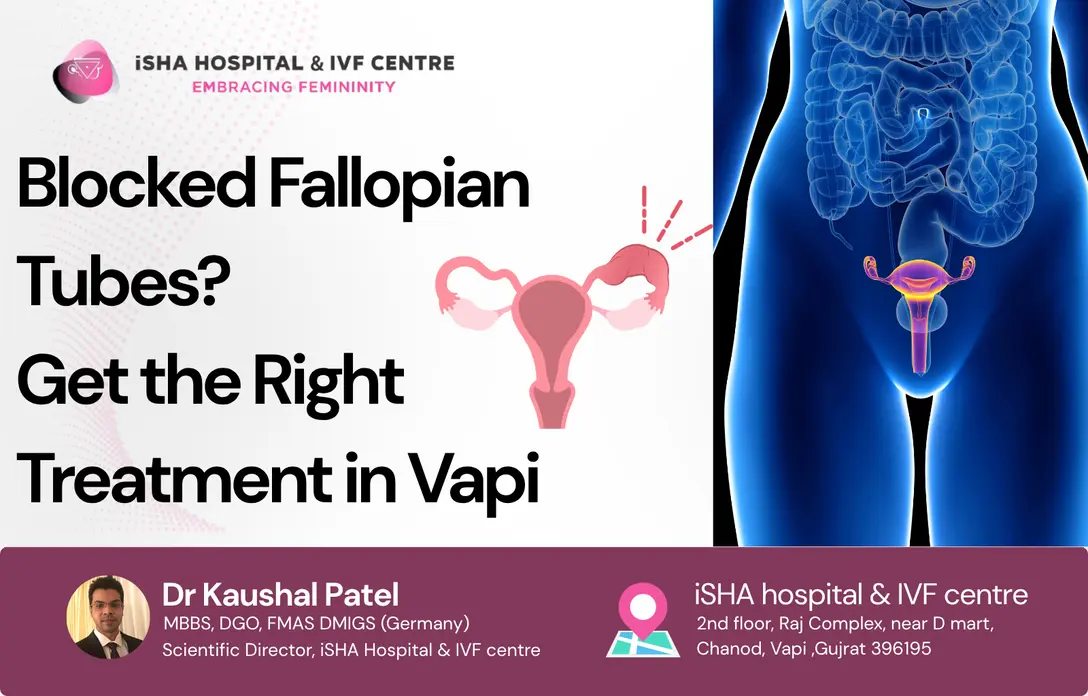
There are three locations where a blockage can occur: near the uterus (proximal), in the middle of the tube (mid-segment), or near the ovary (distal). The location and severity of the blockage matter significantly when deciding on the best course of treatment.
What Causes Blocked Fallopian Tubes? The Real Reasons Behind the Diagnosis
A blockage in the fallopian tube almost always has an underlying cause. Understanding what caused yours helps Dr. Kaushal Patel determine the most effective approach to treatment. The most common causes we see in patients coming to iSHA Hospital from Vapi, Daman, Silvassa, and surrounding areas of South Gujarat include:
Pelvic Inflammatory Disease (PID)
PID is the most frequent cause of tubal blockage. It develops when a bacterial infection – often from a sexually transmitted infection like chlamydia or gonorrhea – spreads upward from the vagina and cervix into the uterus and fallopian tubes. Even if the infection was treated and resolved, the scar tissue left behind can cause permanent narrowing or complete blockage of the tubes. Many women are not even aware they had PID, as it doesn’t always produce obvious symptoms.
Endometriosis
When endometrial-like tissue grows outside the uterus, it can attach to and grow around the fallopian tubes, creating inflammation, adhesions, and blockages over time. Endometriosis affects roughly 10% of women of reproductive age, and tubal involvement is one of the primary reasons it leads to infertility. Women with endometriosis often benefit from early fertility evaluation, particularly if the condition is known to be affecting the tubes. You can read more about endometriosis treatment at iSHA Hospital.
Previous Pelvic or Abdominal Surgery
Any surgery in the pelvic region carries a risk of adhesion formation – bands of scar tissue that can form between organs and structures. A previous cesarean section, appendectomy, ovarian cyst removal, or fibroid surgery can all leave behind adhesions that block or kink the fallopian tubes. This is not a complication of poor surgical technique – it’s simply how the body heals from trauma in the pelvic cavity.
Hydrosalpinx
Hydrosalpinx is a specific type of blockage where one or both fallopian tubes become swollen and filled with fluid, typically as a result of a previous infection. The fluid seals the tube shut from the inside. What makes hydrosalpinx particularly important to treat before IVF is that the fluid can leak back into the uterine cavity and create a toxic environment for embryos, significantly lowering IVF success rates. According to Cleveland Clinic, treating a hydrosalpinx before IVF improves pregnancy chances substantially – which is why Dr. Kaushal takes this step very seriously before proceeding to embryo transfer.
Previous Ectopic Pregnancy
An ectopic pregnancy – where the fertilized egg implants in the fallopian tube instead of the uterus – can cause permanent damage to that tube, especially if it ruptured or required surgical removal. Women with a history of ectopic pregnancy have a higher risk of both repeat ectopic pregnancy and tubal blockage.
Uterine Fibroids
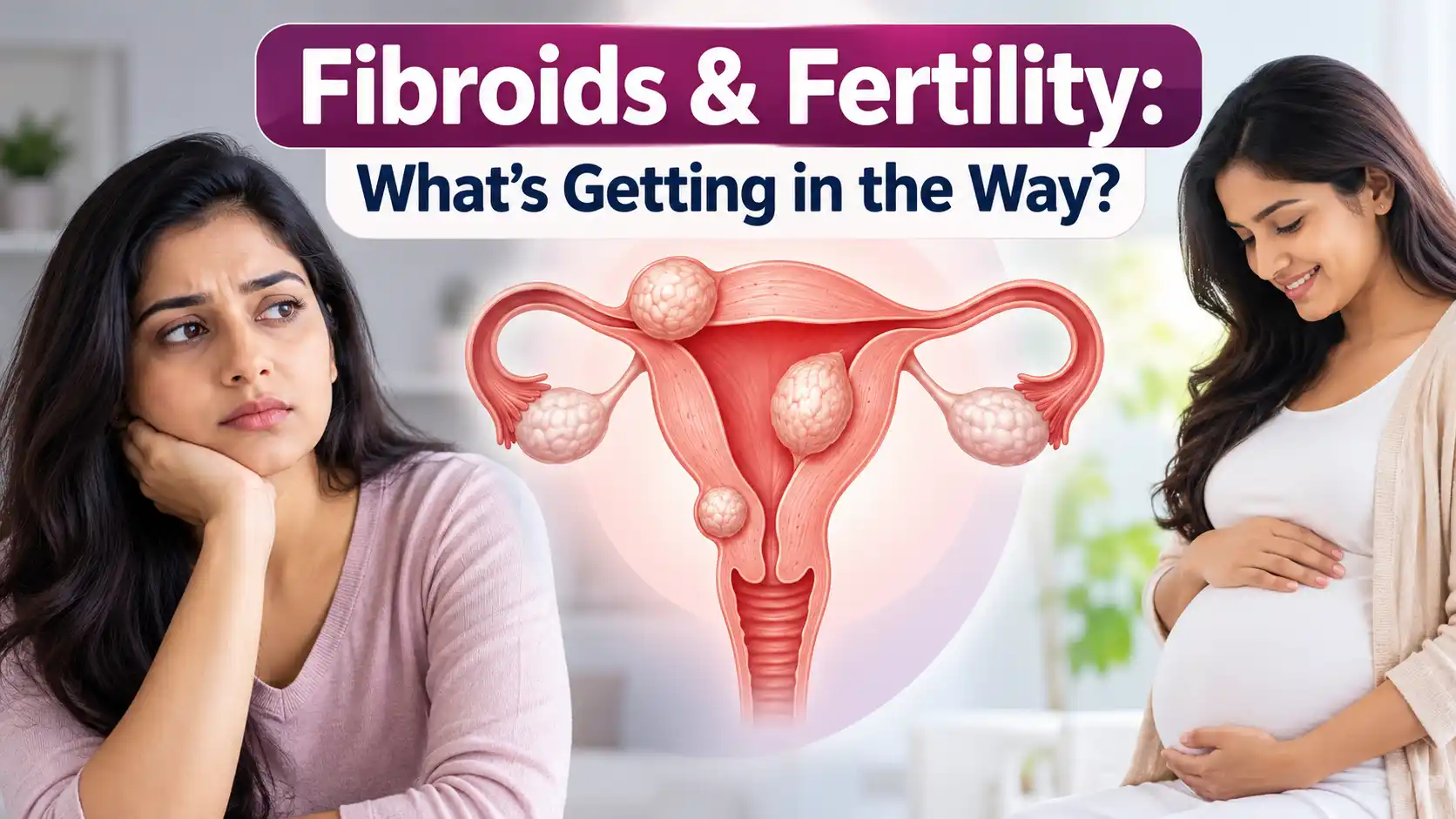
Fibroids that develop close to the junction where the fallopian tubes enter the uterus can physically compress the tube opening and cause an obstruction. You can learn more about fibroid treatment at iSHA Hospital and how it connects to fertility outcomes.
Congenital Abnormalities
A small number of women are born with structural abnormalities in their fallopian tubes – tubes that are unusually narrow, malformed, or partially absent. These cases require a different approach to treatment, typically bypassing the tubes entirely through IVF.
How Blocked Fallopian Tubes Are Diagnosed at iSHA Hospital, Vapi
Before any treatment can begin, we need to understand exactly where the blockage is, how severe it is, and what’s causing it. At iSHA Hospital, we use a combination of tests to get a complete picture.
HSG – Hysterosalpingogram
This is usually the first test ordered when tubal blockage is suspected. During an HSG, a contrast dye is injected through the cervix into the uterus, and X-ray images are taken as the dye flows through. If the tubes are open, the dye spills freely into the pelvic cavity. If it stops at any point, that indicates a blockage. The procedure takes about 20-30 minutes and is done without general anesthesia – most women feel mild cramping, similar to period pain, during and briefly after the test.
HSG is very good at detecting whether a blockage exists and approximately where it is. However, it occasionally gives false positives – a tube may appear blocked due to spasm during the test rather than a true structural blockage. This is why, for many patients, we follow up an abnormal HSG with a diagnostic laparoscopy before making treatment decisions.
Diagnostic Laparoscopy
Laparoscopy is the gold standard for diagnosing tubal blockage because it allows direct visualization of the fallopian tubes, ovaries, and pelvic cavity. Under general anesthesia, a thin camera is inserted through a small incision near the navel. The surgeon can see adhesions, endometriosis deposits, hydrosalpinx, and the exact location of any blockage in real time. Crucially, when blockage is confirmed, many surgical corrections can be performed in the same procedure – diagnosis and treatment happen together.
Dr. Kaushal Patel is a trained laparoscopic surgeon with over 12,000 procedures to his experience, making diagnostic and operative laparoscopy a core strength at iSHA Hospital. You can read more about laparoscopy services at iSHA Hospital and what the procedure involves.
Sonohysterogram (SIS)
A saline infusion sonogram – where fluid is passed through the cervix while a vaginal ultrasound is performed – can sometimes detect structural problems near the tube openings. It’s less definitive than HSG or laparoscopy for tubal assessment, but useful in combination with other tests.
Blocked Fallopian Tubes Treatment Options in Vapi – What’s Available and What’s Right for You
This is the part most patients want to get to. Once we know the blockage is real, the question becomes: what can be done about it? The answer depends on several factors – where the blockage is, how severe the damage is, your age, your ovarian reserve, and whether there are any other fertility factors in play.
At iSHA Hospital, we don’t take a one-size-fits-all approach. Dr. Kaushal Patel reviews each case individually and presents you with an honest assessment of which path gives you the best realistic chance of pregnancy.
1. Laparoscopic Surgery to Open the Tubes
For women with mild to moderate tubal blockage – particularly where scar tissue or adhesions are the cause – laparoscopic surgery offers the possibility of restoring natural fertility. Under general anesthesia, Dr. Kaushal uses fine laparoscopic instruments to remove adhesions, open blocked segments of the tube, and restore normal anatomy as closely as possible.
Several specific surgical techniques fall under this category:
- Adhesiolysis – Cutting and removing adhesions (scar tissue bands) that are pulling on or blocking the tubes from the outside
- Fimbrioplasty – Repairing the fimbriae, the finger-like projections at the ovarian end of the tube that capture the egg after ovulation. If these are damaged or stuck together, this procedure separates them and restores their function
- Salpingostomy (Neosalpingostomy) – Creating a new opening at the ovarian end of a tube that has been sealed shut by hydrosalpinx. This is a more complex repair and carries some risk of re-closure over time
- Tubal Reanastomosis – Removing the damaged segment of a tube and rejoining the two healthy ends. This is typically used for women who had a tubal ligation in the past and now wish to reverse it
Laparoscopic surgery is done as a daycare procedure at iSHA Hospital – most patients are discharged the same day. Recovery takes about one to two weeks before returning to normal activity.
The success of tubal surgery in achieving pregnancy depends heavily on the extent of the damage. Women with mild adhesions and otherwise healthy tube walls have significantly better outcomes than those with severe scarring or completely destroyed tube architecture. Dr. Kaushal will give you an honest picture of what the surgery can realistically achieve in your case.
2. Tubal Cannulation
For proximal blockages – those occurring very close to where the tube enters the uterus – tubal cannulation is often a first-line approach. A thin, flexible catheter is passed through the cervix and uterus and into the fallopian tube under imaging guidance, clearing debris or mild blockages from the inside. This procedure can often be performed at the time of an HSG, requiring no incisions and no general anesthesia.
Tubal cannulation is most effective when the blockage is due to mucus plugs or debris rather than structural scarring, which is why it works well for some proximal blockages but not for extensive damage further along the tube.
3. Salpingectomy Before IVF – When Removing the Tube Helps
This is a recommendation that confuses many patients at first: remove the tube entirely? But in cases of hydrosalpinx, removing the affected tube before IVF is often the most fertility-protective decision you can make.
Here’s the logic: a tube filled with fluid (hydrosalpinx) cannot be functionally repaired in most cases. And the fluid inside it can drain backward into the uterus, creating an environment that actively harms embryo implantation. Studies show that IVF success rates in women with untreated hydrosalpinx are nearly halved compared to those who have the tube surgically removed first. So while a salpingectomy means losing the tube, it gives your IVF cycle a dramatically better chance of working. Dr. Kaushal performs this laparoscopically as a short, minimally invasive procedure, with IVF proceeding once recovery is complete.
4. IVF – Bypassing the Tubes Entirely
IVF was originally developed specifically as a treatment for tubal infertility – it’s literally a fallopian tube bypass. During IVF, eggs are retrieved directly from your ovaries, fertilized with sperm in our embryology lab, and the resulting embryo is transferred directly into your uterus. The fallopian tubes are completely bypassed. They play no role in the process at all.
According to Cleveland Clinic, IVF was initially developed specifically to treat infertility caused by blocked fallopian tubes and remains one of the most effective solutions for this condition today.
IVF is typically recommended when:
- Both fallopian tubes are completely blocked or severely damaged
- The tube walls are thickened or extensively scarred, making repair unlikely to restore function
- There are additional infertility factors – such as low sperm count or reduced ovarian reserve – that make natural conception after tubal repair unlikely anyway
- The woman is above 35 and time is a significant factor
- Previous tubal surgery failed to result in pregnancy
To understand the IVF process in detail, including how cycles work at iSHA Hospital, read our step-by-step IVF process guide for Vapi patients.
Surgery or IVF – How Dr. Kaushal Helps You Choose the Right Path
This is the decision that matters most, and it’s not one you should have to make based on guesswork or generic advice from the internet. The right answer is different for every patient, and it depends on a careful reading of your specific situation.
As a general framework, surgical repair tends to make more sense when: the blockage is mild and localized, you’re under 35 with good ovarian reserve, there are no other significant infertility factors, and you want the possibility of natural conception without repeated fertility treatments. If surgery works, it can open the door to getting pregnant naturally in the months that follow – sometimes for multiple pregnancies over the years ahead.
IVF tends to be the better first choice when: the damage is extensive, both tubes are involved, your age or ovarian reserve makes time a real consideration, or when repair surgery carries a significant risk of ectopic pregnancy due to the damaged state of the tube tissue. IVF is also the right answer when surgery has already been attempted and pregnancy hasn’t occurred despite open tubes.
Dr. Kaushal will present you with both options, explain what the expected outcomes are for someone in your specific situation, and let you make an informed decision. There’s no pressure, no upselling, and no standard pathway that everyone is funneled into. This is your body and your family – you deserve a clear, personalized conversation about what will work best for you.
Can You Get Pregnant with One Blocked Tube?
Yes – and this is something many patients don’t realize. If only one fallopian tube is blocked but the other is healthy and open, natural conception is still possible. The ovary on the blocked side releases eggs that simply can’t reach the uterus through that tube, but the other tube can still pick up eggs – sometimes even from the opposite ovary – and fertilization can occur normally.
Women with one blocked tube often conceive naturally, though it may take longer since only one tube is functioning. If you’ve been trying for more than 6-12 months with one blocked tube and still haven’t conceived, or if there are other fertility factors involved, we can discuss whether any intervention makes sense.
One important note: having one blocked tube doesn’t guarantee the other tube is perfectly healthy. Dr. Kaushal will evaluate both tubes carefully and check for any structural issues in the open tube before drawing conclusions about your fertility outlook.
Blocked Fallopian Tubes and Ectopic Pregnancy Risk
One complication that’s worth understanding is the connection between blocked tubes and ectopic pregnancy. A tube that is damaged but not completely blocked – one where the egg can enter but movement through it is restricted – creates a higher risk of an ectopic pregnancy. The fertilized egg begins its journey toward the uterus but gets stuck in the tube before reaching it.
Ectopic pregnancy is a medical emergency. It can cause the tube to rupture and result in serious internal bleeding. Women with known tubal damage, a history of PID, or a previous ectopic pregnancy need to be especially alert to symptoms of ectopic pregnancy in early pregnancy – one-sided pelvic pain, bleeding, and shoulder tip pain are warning signs that require immediate medical attention.
At iSHA Hospital, any pregnancy in a woman with a history of tubal disease is monitored carefully from the earliest positive test, with early ultrasound to confirm intrauterine placement of the pregnancy before week 6.
Why Choose iSHA Hospital for Blocked Fallopian Tubes Treatment in Vapi
Patients come to iSHA Hospital from Vapi, Daman, Silvassa, Umbergaon, Surat, and across South Gujarat for blocked fallopian tube treatment. What they consistently tell us is that they felt heard here in a way they didn’t at larger, busier centres where they were just another case number.
Dr. Kaushal Patel brings together the skills that matter most for this condition: laparoscopic surgical expertise trained in Germany, Dubai, and India, combined with complete IVF capability under one roof. If surgery doesn’t achieve the outcome hoped for, the transition to IVF happens seamlessly without having to start fresh at a different facility with a different doctor who doesn’t know your history.
With over 12,000 successful fertility surgeries and 25,000+ consultations, Dr. Kaushal has seen and treated every presentation of tubal infertility – from mild adhesiolysis to complex bilateral hydrosalpinx management before IVF. He is also a published researcher in reproductive medicine, which means his approach to treatment reflects current evidence rather than outdated protocols.
Our lab and surgical infrastructure at iSHA Hospital are equipped for the full range of care – HSG, diagnostic and operative laparoscopy, hysteroscopy, IVF, ICSI, and embryo transfer – all within the same center. For women facing tubal infertility, having everything in one place is not just convenient. It’s clinically better, because the same team that diagnoses you, treats you.
If you’d like to understand more about what a fertility workup at iSHA looks like and what options are available, visit our IVF/ICSI service page or our complete fertility services overview.